Pope & Young Scoring Simplified: How to Judge Archery Animals Without Overthinking It
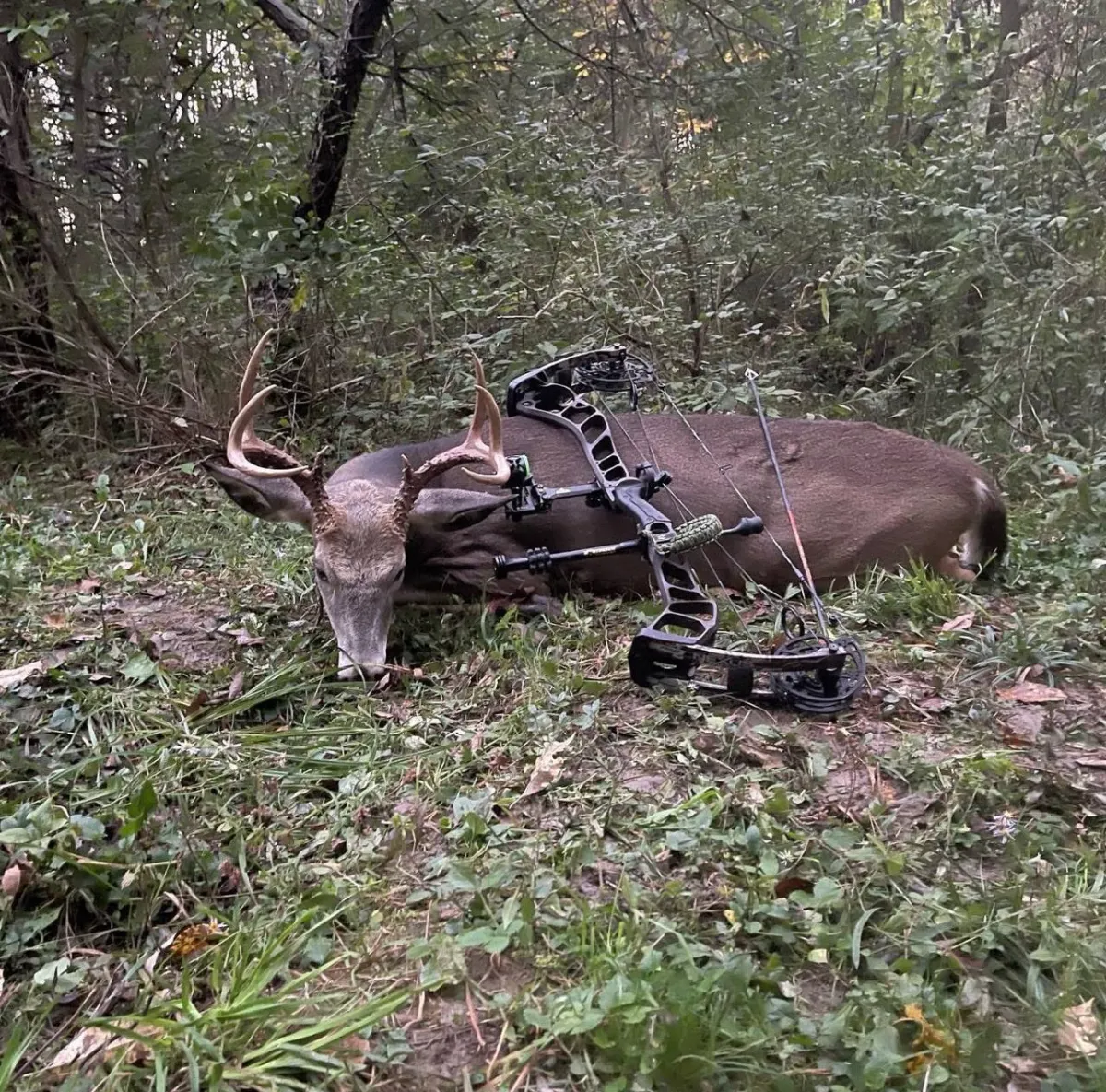
Pope and Young scoring is basically Boone and Crockett for archery: the same structure of length, mass, and symmetry, just with lower score thresholds and a heavier emphasis on clean, ethical bowhunting. If you already understand B and C, you understand most of this. The rest is about applying it to realistic archery expectations, because chasing a record with a bow is a different game than doing it with a rifle.
What Pope and Young actually is
Pope and Young is the official record-keeping system for bowhunted North American big game. To qualify, an animal has to be taken with archery equipment, meet the minimum score, and be harvested under fair-chase rules. It isn't about killing the biggest animal possible, it's about doing it with a bow, cleanly and ethically. That framing matters, because archery changes the whole calculus of what you should be after.
Why it's different for bowhunters
With a rifle you can sit back, pick an animal apart, and wait for perfect. With a bow, encounters are close and fast, shot angle matters enormously, and your decisions happen in seconds. So you're not chasing the biggest animals on the mountain, you're chasing realistic, high-quality opportunities. A simple scoring system in your head helps you set a standard ahead of time, make the call quickly at close range, and avoid passing animals you should take.
The same three things, plus the numbers
Score still comes from length, mass, and symmetry. Long beams and long G2s, G3s, and G4s build the frame; an archery animal doesn't need to be massive, it needs to be well built. Mass matters even more here, because thick bases and consistent beams make an average animal stand out fast. Balance still wins, since wild, uneven racks shed inches in deductions. The G points work exactly as they do in B and C, with the G2 and G3 carrying most of your score and weak tops marking an average animal. What changes is the bar. Roughly speaking, the book starts around 125 typical and 155 non-typical for whitetail, 145 typical and 170 non-typical for mule deer, 260 typical and 300 non-typical for elk, 67 for pronghorn, and 18 for black bear, which is a skull measurement. Those are realistic archery goals, not once-in-a-lifetime numbers.
What to look for, animal by animal
A solid Pope and Young bull has good beam length, strong G3s and G4s, and decent mass; you're after 260 to 300 class animals, not 350-plus giants. On mule deer, focus on deep forks, good width, and solid beams, where a clean four-by-four with good forks can make the book. Whitetails reward long G2s and G3s, balance, and thick beams. Pronghorn come down to good height, roughly twice ear length, with strong prongs and solid mass. And black bears are scored by skull but judged visually, so you're reading maturity, a big head, small-looking ears, and a thick body, not inches.
The right mindset
In the field, gross score is what most bowhunters think about, total inches before the symmetry deductions that produce the net. The simple gut check still works: is it above average, does it have good tine length, solid mass, and balance? If yes, it's likely Pope and Young caliber. Where people go wrong is passing good animals while waiting for perfect, overestimating score, ignoring mass, and letting ego override opportunity. A Pope and Young animal is above average, mature, and well built; it doesn't have to be enormous, it has to be right for the hunt. If you want help lining up the tags and units that create those encounters, TAGZ handles the research so you can focus on the shot.
Was this article helpful?
Previous
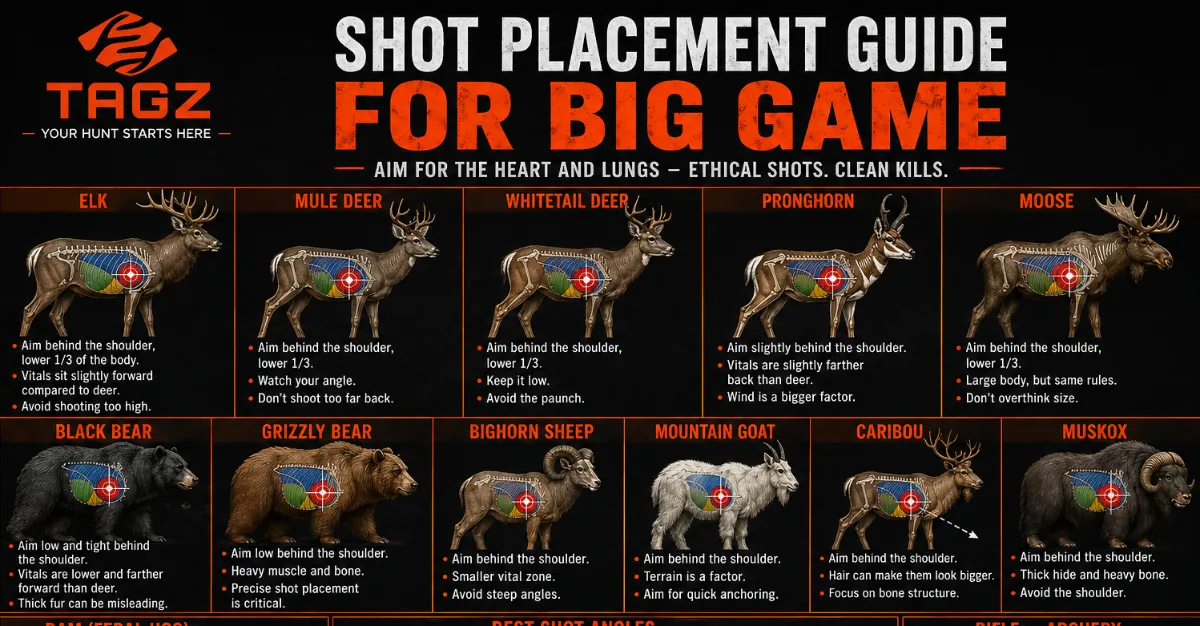
Shot Placement Guide for Big Game: Elk, Deer, Bear, Moose, Sheep, Goat, Caribou, and Muskox
Aim low behind the shoulder, understand angles, and don’t rush the shot. Discipline—not gear—is what leads to clean kills.
Next
Colorado GMU 4 Elk Hunting: A Travel-Style Guide to One of the West’s Most Misunderstood Units
Unit 4 offers real elk opportunity, but pressure changes everything. Hunt smarter, not deeper, and you’ll stay in the game.