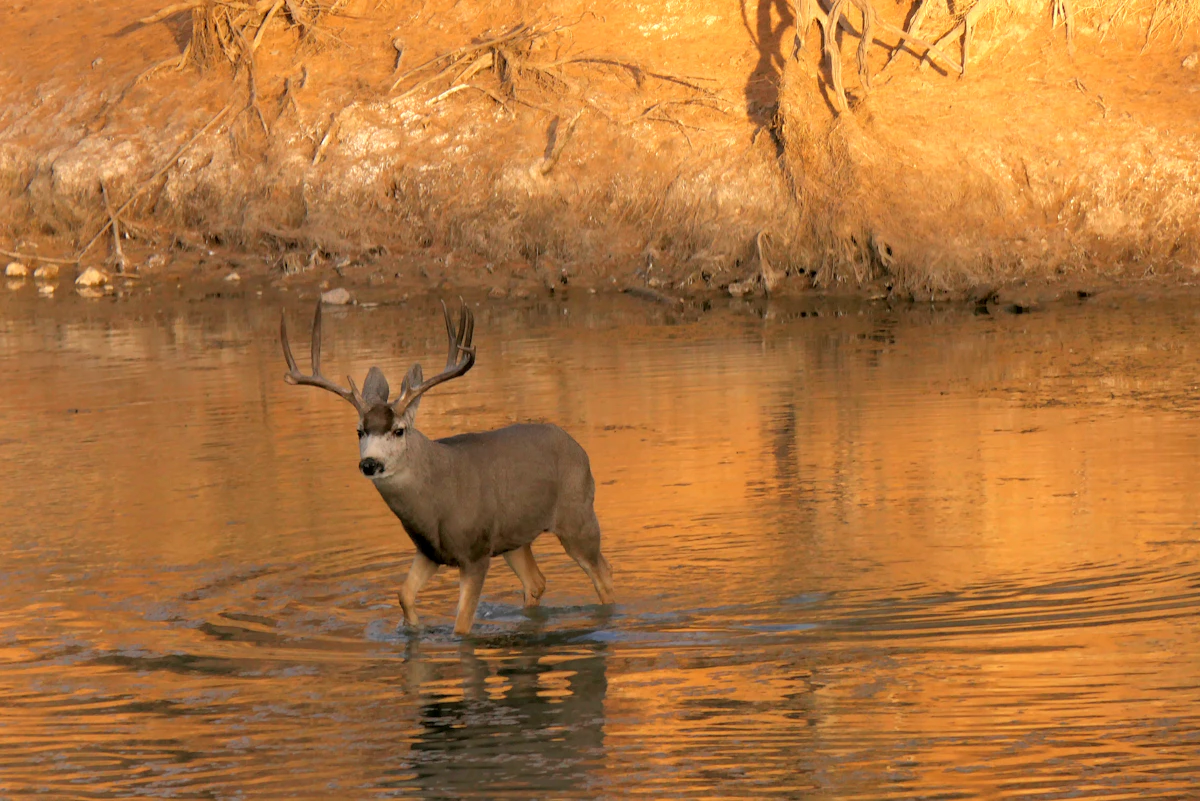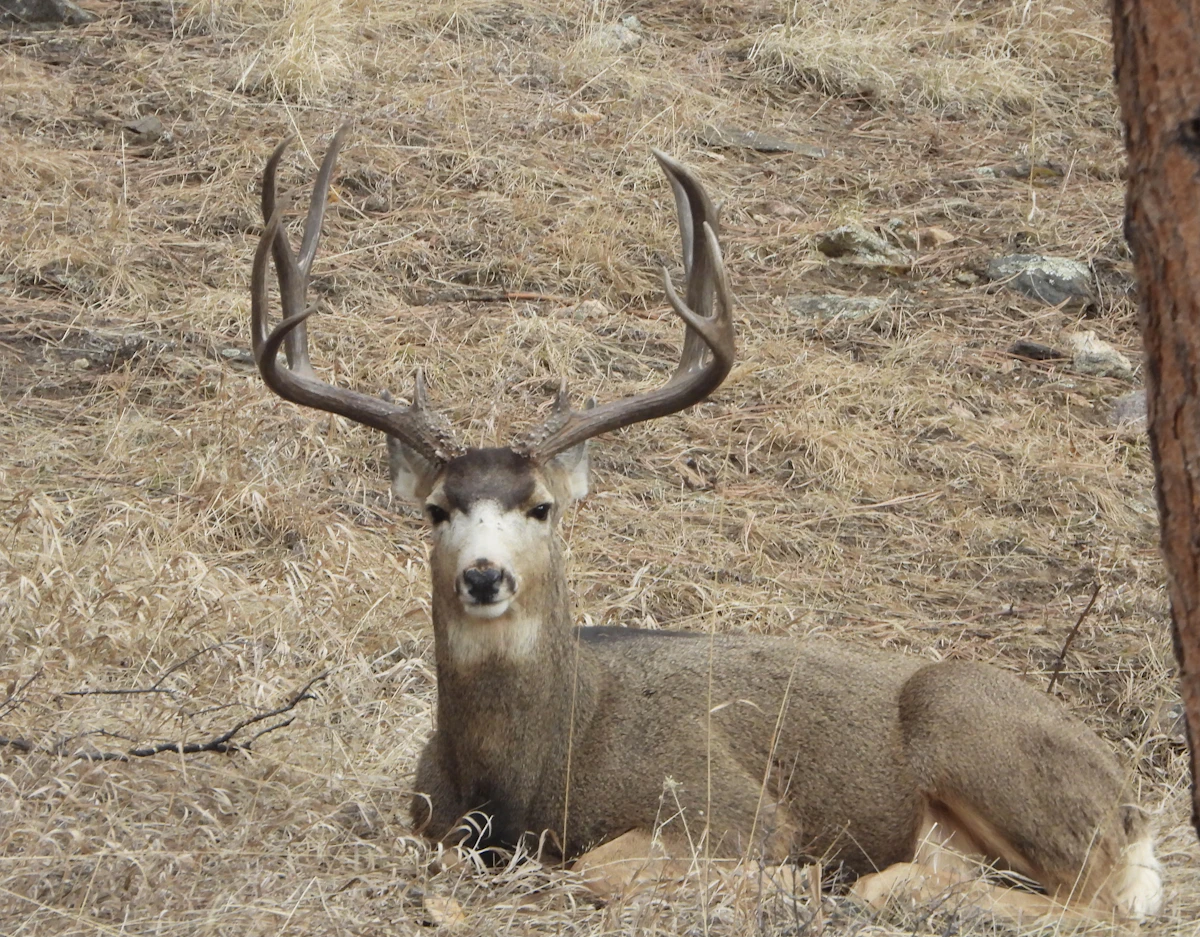
Planning a Mule Deer Hunt Around Migration & Weather in 2027
Mule Deer Migration & Weather 2027: Quick Answers for Hunters
What weather causes mule deer to migrate?
Mule deer migration can be influenced by snow accumulation, seasonal changes in forage, temperature, and traditional movement patterns. Significant snow can encourage deer to leave higher elevations, but migration timing varies by herd and location.
Does the first snowfall trigger mule deer migration?
Not necessarily. Some deer move before substantial snowfall, while others remain at higher elevations until deeper snow or declining forage availability makes those areas less favorable.
What is the best weather for mule deer hunting?
There is no single ideal weather pattern. Cool temperatures, manageable snow, and changing conditions can create useful hunting opportunities, but deer movement depends on local habitat, hunting pressure, and seasonal behavior.
Do mule deer migrate during the rut?
Some mule deer migrate during periods that overlap with breeding activity. However, migration and the rut are separate biological processes, and their timing varies among populations.
When do mule deer migrate in Colorado?
Many Colorado mule deer move toward lower elevations during fall as seasonal conditions change. The timing varies by herd, elevation, snow conditions, and geographic region.
When do mule deer migrate in Wyoming?
Wyoming mule deer migrations vary widely among herds. Some populations travel substantial distances between summer and winter ranges, while others make shorter seasonal movements.
Can hunters predict mule deer migration using weather forecasts?
Weather forecasts can help hunters identify conditions that may influence movement, but they cannot reliably predict the exact day or route of migration.
Where can hunters find mule deer migration maps?
The U.S. Geological Survey publishes migration mapping resources developed with state and Tribal wildlife agencies. Individual state wildlife departments also provide information about seasonal ranges and migration corridors.
Understanding Mule Deer Migration
Mule deer are among the most recognizable big-game animals in the American West.
Their seasonal movements can take them from high mountain basins and alpine habitats to sagebrush foothills, desert winter ranges, and lower-elevation valleys.
These movements allow deer to take advantage of changing food availability and avoid some of the harshest winter conditions.
However, not every mule deer population follows the same migration pattern.
Some populations migrate considerable distances. Others move only a few miles between seasonal habitats, and some remain relatively resident throughout the year.
The U.S. Geological Survey has documented numerous Western big-game migration routes using GPS tracking data collected through partnerships with wildlife agencies.
These studies demonstrate that migration is a complex, herd-specific behavior rather than a simple response to snowfall.
Official research: USGS Western Migrations
Why Mule Deer Migrate
Three major factors influence seasonal migration.
1. Seasonal Forage Availability
During spring and summer, higher elevations can provide nutritious vegetation.
As fall progresses, plant growth changes and forage quality declines.
Migrating deer may move toward seasonal ranges that offer more accessible food during winter.
2. Snow Accumulation
Deep snow can make traveling and feeding more energetically expensive.
Deer may respond by moving into lower-elevation areas where snow conditions are less severe.
However, snow thresholds vary by habitat, individual animal, and local conditions.
3. Seasonal Habitat Use
Many mule deer populations repeatedly use established summer ranges, winter ranges, and migration corridors.
These traditional movements can persist across generations.
Understanding where deer spend different parts of the year is often more useful than simply knowing where they were harvested in a previous season.
How Weather Affects Mule Deer Movement
Weather affects mule deer behavior throughout the hunting season.
Hunters should evaluate multiple weather variables together rather than treating any single forecast as a guaranteed movement trigger.
Snowfall and Mule Deer Migration
Snowfall is one of the most closely watched conditions during late-season mule deer hunting.
When snow accumulates at higher elevations, deer may begin moving toward lower elevations.
However, the response is not always immediate.
Light Snowfall
A light snowfall may:
Improve visibility of deer tracks.
Make animals easier to spot against contrasting terrain.
Create opportunities to identify recently used travel routes.
Have little effect on large-scale migration.
Hunters should not assume that a few inches of snow will automatically push deer into winter range.
Moderate Snow Accumulation
More substantial snow accumulation may influence where deer feed, bed, and travel.
Potential changes include:
Increased use of lower-elevation slopes
Movement toward areas with exposed forage
Greater use of established travel routes
Changes in daily activity patterns
The actual response depends on terrain, vegetation, and existing snow conditions.
Deep or Persistent Snow
Deep, persistent snow can restrict access to forage and increase the energy required for movement.
Under these conditions, some deer may move toward more favorable winter habitat.
However, severe winter conditions can also threaten deer survival.
Hunters should recognize that weather severe enough to cause major migration may also create difficult or dangerous travel conditions.
TAGZ planning tip: Compare snow accumulation across elevations, not just the forecast for the nearest town.
Temperature and Mule Deer Activity
Temperature influences mule deer behavior, but the relationship is not as simple as assuming colder weather always produces more movement.
Warm Weather
During warm conditions, mule deer may spend more daylight hours in shaded bedding areas or habitats with favorable thermal conditions.
Hunters may benefit from:
Glassing shaded slopes
Focusing on early morning activity
Watching evening feeding areas
Identifying secure bedding habitat
Minimizing unnecessary disturbance
Cooler Weather
Cooler conditions can reduce heat stress and may create favorable circumstances for daytime activity.
However, the amount of movement still depends on food availability, breeding behavior, hunting pressure, and other factors.
Extreme Cold
Very cold weather can increase energetic demands and influence feeding behavior.
It does not automatically produce increased daylight movement.
Hunters should evaluate the complete weather pattern rather than relying on temperature alone.


Free to join
Download mobile app
- Detailed draw odds
- Point tracking
- Deadline reminders
- 18 states covered





Free to join
Download mobile app
- Detailed draw odds
- Point tracking
- Deadline reminders
- 18 states covered






Free to join
Download mobile app
- Detailed draw odds
- Point tracking
- Deadline reminders
- 18 states covered

Do Cold Fronts Improve Mule Deer Hunting?
Cold fronts are frequently discussed among Western big-game hunters.
An approaching front may bring:
Falling temperatures
Changing wind direction
Precipitation
Snow accumulation
Reduced visibility
Changes in travel conditions
These changes can influence hunting opportunities.
However, a cold front is not a guaranteed trigger for migration or increased buck activity.
Hunting Before a Cold Front
Before a storm, hunters may encounter relatively stable conditions.
Depending on local circumstances, this can provide opportunities to locate deer before weather limits visibility.
Hunting During a Cold Front
During a storm, hunting conditions may become more challenging.
Strong winds, heavy snowfall, and poor visibility can reduce glassing effectiveness.
Hunters must prioritize safety and avoid exposing themselves to dangerous terrain or travel conditions.
Hunting After a Cold Front
After a storm, improved visibility and fresh snow can make it easier to identify tracks and observe deer against the landscape.
This can be particularly useful when deer have shifted into new areas.
Practical takeaway: The greatest advantage of a weather front may be improved information about deer location rather than a guaranteed increase in deer movement.
Mule Deer Migration Timing by State
Migration timing differs across the Western United States.
The following table provides broad planning guidance, not a prediction of 2027 migration dates.
StateGeneral Migration ConsiderationsHunting Planning FocusColoradoElevation, snowfall, and seasonal rangesCompare hunt dates with historical weatherWyomingLong-distance migrations in some herdsStudy migration corridors and winter rangesUtahMountain-to-desert seasonal movementsEvaluate elevation and seasonal habitatIdahoMountain terrain and varied herd movementsResearch herd-specific migration patternsMontanaSeasonal movements across diverse terrainConsider habitat, pressure, and snowNevadaMountain ranges and desert winter habitatMonitor precipitation and forageArizonaHighly variable movement patternsFocus on specific units and local conditionsOregonRegional differences in mountain and high-desert habitatReview local herd informationCaliforniaSeasonal migration in several mountain populationsResearch access and weather patternsWashingtonDiverse mountain and shrub-steppe environmentsEvaluate local seasonal ranges
Not every herd within these states migrates in the same way.
Colorado Mule Deer Migration
Colorado's mountainous terrain creates distinct seasonal habitats.
Many deer move between higher-elevation summer ranges and lower-elevation winter areas.
Colorado Parks and Wildlife explains that seasonal movement is influenced by plant growth, weather, and access to suitable habitat.
Some Colorado migrations are relatively short compared with the long-distance movements documented elsewhere in the West.
Colorado Hunting Strategy
Hunters planning second-, third-, or fourth-season rifle mule deer hunts should consider:
Historical snowfall
Elevation differences
Migration corridors
Winter-range locations
Season dates
Public-land access
Hunting pressure
Later hunting dates may overlap with changing deer distribution, but a late-season permit does not guarantee migrating deer.
Official source: Colorado Parks and Wildlife — Wildlife Migration and Movement
Wyoming Mule Deer Migration
Wyoming contains some of North America's best-studied mule deer migration systems.
Research has documented extensive seasonal movements connecting summer and winter habitats.
These migrations can cross public and private land, highways, and other landscape features.
Wyoming Game and Fish emphasizes the importance of habitat conditions, drought, and winter severity in mule deer population health.
Wyoming Hunting Strategy
Hunters should evaluate:
Specific herd migration routes
Seasonal ranges
Public-land access
Historical snow conditions
Recent winter survival
Deer population trends
A famous migration corridor does not automatically translate into a productive or legally accessible hunting location.
Official source: Wyoming Game and Fish — Deer and Data
Utah Mule Deer Migration
Utah mule deer occupy diverse environments ranging from high mountain country to desert foothills.
Seasonal movement patterns vary by unit and population.
Hunters should compare hunt dates with local migration patterns and seasonal habitat.
Late-season opportunities may overlap with deer movements, but permit availability and access vary.
Official agency: Utah Division of Wildlife Resources
Idaho Mule Deer Migration
Idaho mule deer occupy mountainous and lower-elevation habitats across the state.
Some populations move seasonally between mountain summer ranges and winter habitats.
Weather, forage conditions, and local herd characteristics affect these movements.
Hunters should examine specific game management units rather than relying on statewide assumptions.
Official agency: Idaho Fish and Game
Nevada and Arizona Mule Deer Migration
Desert and mountain mule deer populations can exhibit different movement patterns from deer occupying high-elevation Rocky Mountain environments.
In these regions, rainfall, drought, water availability, forage conditions, and local habitat may strongly influence deer distribution.
Not every population undertakes a major seasonal migration.
Hunters should focus on the specific herd and hunting unit.
Official agencies:
How the Mule Deer Rut Affects Migration Hunting
The mule deer rut and seasonal migration can overlap, creating important hunting opportunities.
However, they are not the same biological event.
Migration is primarily associated with seasonal habitat use.
The rut involves breeding behavior.
Why the Rut Matters
During the breeding season, mature bucks may spend more time searching for receptive does.
This can change:
Daily movement patterns
Buck visibility
Associations between bucks and doe groups
Use of travel routes
Daylight activity
Hunters may encounter mature bucks in areas where they were previously difficult to locate.
Does the Rut Make Bucks Migrate?
Not necessarily.
A buck may move extensively while searching for does without undertaking a seasonal migration.
Similarly, a deer may migrate between seasonal ranges before, during, or after the primary breeding period.
Hunting Strategy
Hunters should consider both seasonal habitat and the location of doe groups.
A late-season strategy based only on migration routes may overlook breeding-related movement.
TAGZ planning tip: Evaluate whether your hunt dates overlap with migration, breeding activity, or both.
How to Identify Mule Deer Migration Corridors
Understanding migration corridors can help hunters make better scouting decisions.
However, migration maps generally represent movements documented from studied animals and should not be interpreted as real-time deer locations.
Step 1: Identify Summer and Winter Range
Start by locating the seasonal habitats used by the target herd.
Look for differences in:
Elevation
Vegetation
Snow accumulation
Terrain
Seasonal forage availability
Step 2: Research Documented Migration Routes
Use official wildlife agency research and published migration mapping resources.
The USGS Western Migrations platform allows users to explore mapped migration routes, stopovers, and winter ranges where data are available.
Research tool: https://www.usgs.gov/tools/western-migrations
Step 3: Examine Terrain Features
Potential travel features include:
Mountain saddles
Drainage systems
Benches
Foothill transitions
Ridgelines
Natural terrain openings
These features can help hunters develop scouting hypotheses.
However, terrain alone does not establish that deer regularly use a particular route.
Step 4: Confirm Legal Access
A mapped corridor may cross private property, restricted land, or areas with seasonal closures.
Always verify land ownership, access rights, and current regulations.
Step 5: Scout Without Disrupting Wildlife
Use binoculars, spotting scopes, and distant observation when possible.
Avoid unnecessarily disturbing deer, particularly during migration and winter.
Migration corridors are important wildlife habitats, not guaranteed hunting locations.
Free to join
Download mobile app
- Detailed draw odds
- Point tracking
- Deadline reminders
- 18 states covered
Free to join
Download mobile app
- Detailed draw odds
- Point tracking
- Deadline reminders
- 18 states covered
Free to join
Download mobile app
- Detailed draw odds
- Point tracking
- Deadline reminders
- 18 states covered
Planning a Mule Deer Hunt Around Weather Forecasts
A useful weather-based hunting plan should begin before opening day.
Hunters can compare seasonal forecasts, historical conditions, and the physical characteristics of their hunting area.
30 Days Before the Hunt
Review:
Historical precipitation
Typical temperatures
Seasonal migration information
Public-land access
Terrain and elevation
Current drought conditions
Identify multiple scouting areas at different elevations.
14 Days Before the Hunt
Begin monitoring:
Extended weather forecasts
Snow accumulation trends
Temperature changes
Road conditions
Seasonal closures
Consider whether your original scouting plan still makes sense.
7 Days Before the Hunt
Review more detailed forecasts.
Identify:
Primary hunting locations
Backup areas
Safe travel routes
Glassing locations
Alternative access points
Avoid building the entire hunt around one predicted storm.
During the Hunt
Evaluate conditions each day.
Ask:
Has snow accumulated at higher elevations?
Have deer changed their feeding or bedding locations?
Are fresh tracks appearing in new areas?
Has hunting pressure displaced deer?
Are road or trail conditions changing?
Does the current location still match the seasonal habitat deer are likely to use?
Adapt based on field observations rather than relying entirely on predictions.
Mule Deer Weather Strategy: Conditions and Hunting Adjustments
Weather ConditionPossible Deer ResponseHunting AdjustmentWarm, dry weatherContinued use of secure habitatGlass shaded slopes and feeding areasLight snowfallLimited migration response; improved trackingLook for fresh tracks and recent activityPersistent mountain snowPotential movement toward lower elevationsEvaluate seasonal transition areasCold frontVariable activity and distributionMonitor conditions before and after the frontHeavy windChanges in bedding and visibilityFocus on sheltered terrainSevere winter stormRestricted movement or seasonal relocationPrioritize safety and legal accessMild late fallDeer may remain in higher habitats longerMaintain higher-elevation scouting options
These are general possibilities, not guaranteed behavioral responses.
How Drought Changes Mule Deer Hunting
Drought can influence mule deer distribution and population health.
Reduced precipitation may affect vegetation growth, forage quality, and water availability.
Wyoming Game and Fish has identified drought and severe winter conditions as important factors affecting mule deer survival and reproduction.
Drought and Summer Habitat
Poor summer forage conditions may reduce the energy reserves deer accumulate before winter.
This can affect body condition and survival.
Drought and Hunting Locations
Hunters may find that deer distribution differs from previous years when habitat conditions change.
However, deer do not necessarily concentrate around every visible water source.
The relationship depends on local ecology and available habitat.
Drought and Long-Term Herd Health
Severe drought followed by a harsh winter can create additional challenges for mule deer populations.
Hunters should consider recent herd conditions when selecting hunting areas.
Official research: Wyoming Game and Fish — Deer and Data
How Hunting Pressure Affects Mule Deer Movement
Weather is not the only factor influencing deer behavior.
Hunting pressure can change how deer use the landscape.
Mature bucks may respond to repeated disturbance by using more secure bedding areas or shifting activity patterns.
Hunters should evaluate:
Road access
Trailhead activity
Popular glassing locations
Human disturbance
Terrain that provides security cover
Legal access to less-pressured areas
Opening Weekend vs. Midweek Hunting
Popular public-land hunting areas can experience significant activity during opening weekends.
In some locations, hunting pressure may decline during weekdays.
However, this varies by unit and season.
A less-crowded area is not automatically a better deer location.
Combining Hunting Pressure With Migration Research
The most useful strategy combines habitat knowledge with an understanding of where hunters are likely to concentrate.
A documented migration route may attract substantial hunting pressure.
Nearby legal hunting opportunities may provide a different experience, depending on deer distribution and access.
Early-Season vs. Late-Season Mule Deer Hunting
FactorEarly SeasonLate SeasonPrimary habitatOften summer or transitional rangeTransitional or winter habitatWeatherFrequently warmerGreater cold and snow potentialMigration activityOften limited or beginningMay overlap with seasonal movementsRut influenceGenerally limitedMay be significantAccessSome high-country access may be easierSnow and closures may restrict travelScouting focusSummer habitat and bedding areasSeasonal ranges and movement patternsMain challengeFinding deer across extensive habitatWeather, access, and changing distribution
These differences vary substantially by region and hunt dates.
Free to join
Download mobile app
- Detailed draw odds
- Point tracking
- Deadline reminders
- 18 states covered
Free to join
Download mobile app
- Detailed draw odds
- Point tracking
- Deadline reminders
- 18 states covered
Free to join
Download mobile app
- Detailed draw odds
- Point tracking
- Deadline reminders
- 18 states covered
Common Mistakes When Planning Around Mule Deer Migration
Mistake 1: Assuming One Snowstorm Will Trigger Migration
Migration is influenced by multiple environmental and biological factors.
A single storm does not guarantee movement.
Mistake 2: Ignoring Herd-Specific Research
Different mule deer populations have different seasonal strategies.
A migration pattern documented in Wyoming may not apply to a Colorado or Arizona herd.
Mistake 3: Hunting Only Winter Range
If conditions remain mild, some deer may still occupy higher elevations or transitional habitats.
Maintain alternative scouting locations.
Mistake 4: Confusing Rut Activity With Migration
A mature buck traveling during breeding season may not be migrating.
Hunters should evaluate both behaviors.
Mistake 5: Overlooking Access Restrictions
Seasonal closures, private property, and road conditions can limit access.
Research regulations before traveling.
Mistake 6: Treating Migration Maps as Real-Time Tracking
Published migration maps are research products, not live GPS tracking systems for hunters.
They identify documented patterns but cannot guarantee current deer locations.
Mistake 7: Ignoring Safety
Snowstorms, remote roads, and rapidly changing mountain conditions can create serious hazards.
A promising weather pattern is never worth unsafe travel.
Mule Deer Migration & Weather 2027: Frequently Asked Questions
What month do mule deer migrate?
Many migratory populations move during fall and spring, but the exact timing varies by herd, elevation, and environmental conditions.
Does snow make mule deer hunting better?
Snow can improve tracking and visibility, and persistent accumulation may influence seasonal movements. However, snow does not guarantee better hunting.
Do mule deer migrate before a snowstorm?
Some deer begin seasonal movement before major snow accumulation, but there is no universal pattern.
How much snow does it take to move mule deer?
There is no single snowfall threshold that applies to every mule deer herd. Movement depends on snow depth, duration, terrain, forage, and local conditions.
Do mule deer move more when temperatures drop?
Cooler conditions can influence activity, but temperature alone does not determine movement.
Where do mule deer go during winter?
Many migratory mule deer use lower-elevation habitats with more accessible forage and less severe snow conditions.
Can mule deer migrate hundreds of miles?
Some mule deer populations undertake exceptionally long migrations. However, many herds travel much shorter distances, and some are largely resident.
Do mature bucks migrate differently than does?
Migration timing and habitat use can vary by sex, age, and individual behavior. Hunters should avoid assuming every mature buck follows the same route as collared does.
Are migration maps useful for hunting?
Yes, they can help hunters understand seasonal habitat and documented movement patterns. However, hunters must verify legal access and should not interpret historical maps as live animal locations.
What is the best state for migration mule deer hunting in 2027?
There is no single best state. Colorado, Wyoming, Utah, Idaho, and other Western states offer different opportunities depending on permits, herd conditions, hunt dates, and access.
Can you predict mule deer migration dates for 2027?
Not precisely. Historical migration research and weather forecasts can support planning, but exact 2027 movement dates cannot be reliably predicted in advance.
How does a mild winter affect mule deer hunting?
Mild conditions may allow deer to remain in certain habitats longer, although the response varies by population and available forage.
Plan Your 2027 Mule Deer Hunt With TAGZ
Planning a successful mule deer hunt requires more than selecting a state and applying for a tag.
Hunters should understand how hunting seasons overlap with migration, weather, breeding activity, and seasonal habitat.
A premium tag may offer exciting opportunities, but hunt dates and environmental conditions can significantly affect the experience.
TAGZ was built by hunters, guides, and outfitters to help simplify big-game hunting research and planning.
With TAGZ, hunters can research supported hunting opportunities, explore draw information, compare application strategies, and organize future hunts.
Whether you're planning a Colorado third-season mule deer hunt, researching Wyoming migration country, or comparing late-season opportunities in Utah, TAGZ can help you approach the application process more strategically.
Explore TAGZ:
Plan smarter. Research your opportunities. Build your next hunt with TAGZ.
Official Mule Deer Migration Research and Hunting Resources
The following sources provide additional information about mule deer migration, seasonal habitat, and wildlife management.
U.S. Geological Survey
Western Migrations Interactive Mapping Platform
Explore documented migration routes, stopovers, and winter ranges.
Corridor Mapping Team — Ungulate Migrations of the West
Learn how wildlife agencies and researchers study seasonal movements.
Colorado Parks and Wildlife
Wildlife Migration and Movement
Information about Colorado's seasonal wildlife movements and migration conservation.
Wyoming Game and Fish Department
Research and information about mule deer habitat, weather, and population challenges.
Additional State Wildlife Agencies
TAGZ Editorial Standards
TAGZ is a hunting draw-odds and hunt-planning platform built by hunters, guides, and outfitters with firsthand experience in the hunting industry.
Our content is designed to help hunters navigate hunting regulations, application systems, draw odds, and hunting opportunities across North America.
TAGZ prioritizes information from official state wildlife agencies, published hunting regulations, and available draw data. Our editorial approach emphasizes accuracy, transparency, and practical information that helps hunters make informed decisions.
Hunting regulations, application deadlines, permit availability, and draw odds can change. We encourage hunters to verify all requirements with the appropriate wildlife agency before applying or hunting.
Learn more: About TAGZ
Editorial note: This article provides general migration and weather-based hunting guidance for 2027. It does not predict exact mule deer movements or guarantee hunting success. Hunters should verify current regulations, access restrictions, and local wildlife conditions before traveling.
Was this article helpful?
Previous
Alaska Guided Caribou Hunts 2027: Costs & Tags
Alaska caribou hunting offers everything from fully guided fly-in expeditions to independent wilderness hunts. The best choice depends on the hunter's experience, budget, preferred hunting conditions, and available legal opportunities. The most important considerations for 2027 are: Cost: Guided packages may require a five-figure budget, with transportation, tags, lodging, and meat shipping potentially adding thousands more. Nonresident eligibility: U.S. nonresidents generally do not need a guide for caribou, but nonresident aliens must use an Alaska-licensed guide for big-game hunting. Permit requirements: Depending on the area, caribou hunts may involve general-season harvest tickets, registration permits, or drawing permits. Draw odds: Alaska does not use conventional preference or bonus points for regular drawing hunts. Hunting areas: Herd population trends, nonresident restrictions, access, and current regulations matter more than historical reputation. Outfitter selection: Verify professional licensing, authorized operating areas, recent hunting experience, and transportation arrangements before paying a deposit. 2027 regulations: Specific dates, quotas, and opportunities must be checked against the applicable Alaska Department of Fish and Game publications. Key takeaways: Guided Alaska caribou hunts can cost approximately $8,000–$18,000 or more per hunter, depending on the outfitter, location, transportation, and services included. Alaska generally does not require nonresident hunters to hire a guide for caribou, although particular permit opportunities may distinguish between guided and unguided applicants. Some caribou hunts use registration or general-season opportunities, while others require drawing permits. Alaska does not use a preference-point or bonus-point system for its regular drawing hunts. Caribou populations, hunt availability, and harvest limits can change substantially between seasons. Hunters should verify 2027 regulations and outfitter credentials before booking. This guide explains how to choose a guided caribou hunt, understand Alaska's permit system, compare outfitter packages, and build a realistic hunting budget.
Related
Alaska Nonresident Caribou Draw Odds 2027: Tags & Hunts
Quick Answer: Can Nonresidents Draw Alaska Caribou Tags in 2027? Yes. Nonresidents can apply for eligible Alaska caribou drawing permits, and Alaska does not use bonus or preference points in its drawing system. Every eligible drawing entry is selected randomly. For the 2026–2027 regulatory year, Alaska listed several caribou drawing opportunities available to nonresidents, including: DC001 — Kenai Mountains, Unit 7 DC590 — Units 14A and 14B DC608 — Killey River, Unit 15B DC618 — Fox River, Unit 15C DC826 — Central Alaska Range, Unit 20A, unguided nonresidents DC828 — Central Alaska Range, Unit 20A, guided nonresidents DC923 — Unit 23, nonresidents only The state also provides general-season and registration opportunities under separate regulations. The best 2027 strategy is to identify the exact hunt code, verify nonresident eligibility, compare historical drawing results, and determine whether a draw permit is necessary for the hunt you want.
Next
Arizona Mule Deer Draw Odds 2027: Tags, Bonus Points & Best Units
Arizona is one of the most sought-after mule deer hunting destinations in the United States. From the legendary Arizona Strip to the Kaibab Plateau and southern Arizona's desert country, hunters can pursue mule deer across dramatically different landscapes. However, drawing an Arizona mule deer tag requires understanding the state's bonus-point system, permit allocations, and hunt-specific application rules. Key takeaways for 2027: Arizona uses a bonus-point system, not a traditional preference-point system, for its big-game drawings. Arizona generally allocates up to 20% of available permits in the bonus-point pass, with remaining permits considered in the subsequent drawing process. Nonresident hunters are subject to permit allocation limits, generally up to 10% of the permits available for a particular hunt. Premium mule deer hunts in the Arizona Strip and Kaibab region can be highly competitive. Some Arizona deer opportunities are available through over-the-counter nonpermit-tag systems, subject to applicable restrictions. The best hunt depends on your bonus-point balance, residency, weapon preference, hunting goals, and willingness to wait. Official 2027 permit numbers, application deadlines, and draw results must be verified with the Arizona Game and Fish Department. TAGZ helps hunters research draw opportunities, compare hunting options, and develop long-term application strategies.