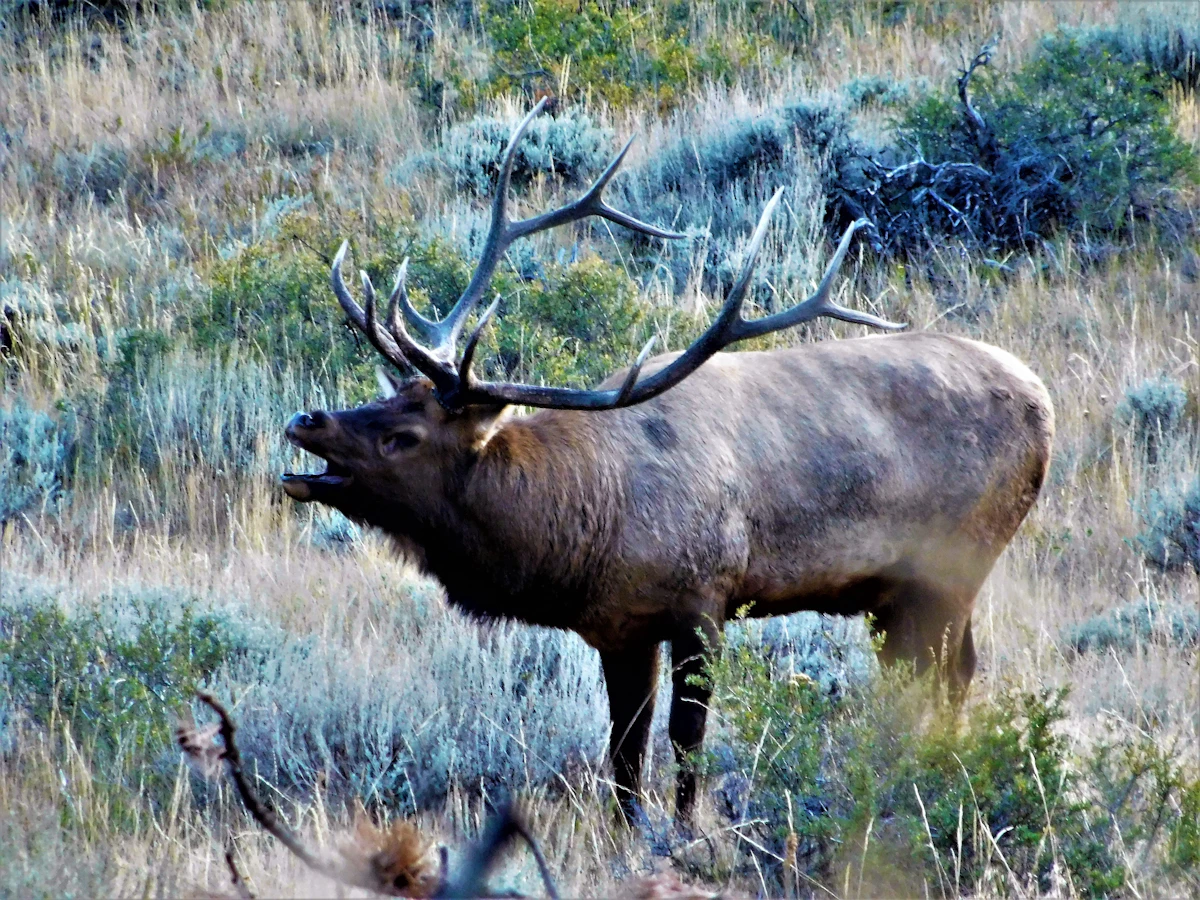
Montana Preference Points vs Bonus Points Explained
Montana Preference Points vs Bonus Points
Montana's point system becomes much easier to understand once you stop treating preference and bonus points as interchangeable.
They serve different purposes.
Think of it this way:
Preference points = Nonresident Combination License
Bonus points = Applicable limited licenses and permits
A nonresident elk hunter may encounter both systems during the same application process, but they're being used for different drawings.
What Are Montana Preference Points?
Montana preference points are primarily a tool for obtaining a Nonresident Combination License.
These licenses include:
Big Game Combination
Elk Combination
Deer Combination
They provide the underlying licenses necessary for applicable general hunting opportunities.
For most nonresident elk and deer hunters, obtaining the appropriate Combination License is the first step.
Are Montana Preference Points Used for Limited Elk Permits?
No.
This is one of the biggest misconceptions about Montana.
Preference points don't determine your priority for a limited elk permit.
They apply to the Nonresident Combination License drawing.
If you're applying for an applicable limited elk permit, bonus points are the relevant point system.
How Do Montana Preference Points Work?
Under Montana's current system, Nonresident Combination Licenses are divided into two groups.
Approximately:
75% of the quota
is awarded according to preference-point priority.
The remaining:
25%
is awarded through a separate random drawing among applicants with zero preference points.
That's an unusual structure.
It means buying one preference point isn't automatically better than entering with zero points in every possible year.
You should examine the historical statistics.
Montana's 75/25 Combination License Drawing
Here's the basic structure:
PoolShare of Applicable Combination LicensesHow It WorksPreference pool75%Applicants with more preference points receive priorityZero-point random pool25%Applicants with zero preference points compete randomly
This is why hunters shouldn't simply say:
"More points always means better Montana odds."
The zero-point pool operates separately.
Are Preference Points Available to Montana Residents?
Not for this system.
Montana preference points discussed here apply to nonresident Combination Licenses.
Montana residents don't need a Nonresident Combination License.
Residents may still encounter Montana's bonus-point system for applicable limited licenses and permits.
How Many Montana Preference Points Can You Have?
Under current rules:
No hunter may hold more than three preference points.
This prevents unlimited preference-point accumulation in the Combination License system.
How Do You Get a Montana Preference Point?
A nonresident can generally purchase a preference point:
- When applying for a Combination License
or
- During the applicable point-purchase period if the hunter isn't applying for a Combination License that year.
However, there are important participation rules.
Don't assume Montana automatically gives you a preference point simply because you're unsuccessful.
Do Montana Preference Points Automatically Accumulate When You Don't Draw?
No.
Preference points are purchased.
This is different from systems where an unsuccessful application automatically creates another point.
Hunters need to intentionally participate in Montana's preference-point program according to current rules.
What Happens to Preference Points When You Draw?
If you're successful in obtaining the Nonresident Combination License:
Your accumulated preference points reset to zero.
This is true because the points have served their purpose—they helped prioritize your Combination License application.
Can You Keep Preference Points After Returning a Combination License?
Don't assume returning the license restores your points.
Under current Montana rules, preference points generally aren't reinstated simply because you return or refund the Combination License after successfully drawing it.
That's especially important for hunters applying simultaneously for a Combination License and a limited permit.
Montana's 80% Refund Option
Nonresident hunters applying for both a Combination License and an elk permit can currently elect an 80% refund option.
If the hunter draws the Combination License but doesn't draw the elk permit, the hunter can receive the applicable refund by giving up the Combination License.
However:
The preference points used to draw the Combination License still reset.
That's a major planning consideration.
Do Montana Preference Points Expire?
They can.
Under current rules, accumulated preference points are lost if a hunter fails to apply for a Nonresident Combination License in consecutive years.
So preference points aren't something you can simply buy once and leave untouched indefinitely.
Verify the current participation rules before skipping an application year.
Montana Outfitter Preference Point
Montana also has a special provision for qualifying nonresident outfitter clients.
An eligible outfitter client can purchase an additional preference point at the time of application.
However, there's an important restriction:
A Combination License obtained using that additional outfitter preference point is valid only for hunting with an outfitter.
That's not a guaranteed outfitter tag.
It's an additional preference point within the Combination License system.
Does Hiring a Montana Outfitter Guarantee a Combination License?
No.
The outfitter point can improve the applicant's preference position under current rules.
But the hunter still participates in the applicable Combination License drawing.
And a license issued using that additional point carries the outfitter-use restriction.
Montana Preference Points and Party Applications
Montana allows party applications for Nonresident Combination Licenses.
For a party:
The individual preference-point totals are averaged.
The resulting average is carried to the third decimal place.
For example:
Hunter A: 3 points
Hunter B: 2 points
Hunter C: 1 point
Party average:
2.000 points
That average determines the party's preference level.
Does Applying as a Party Improve Combination License Odds?
No.
A Montana party receives one entry into the drawing.
Applying as a group is useful when hunters want:
everyone to draw together
rather than attempting to improve mathematical odds.
What Are Montana Bonus Points?
Bonus points are completely different.
Montana bonus points are used for applicable first-choice licenses and permits.
They increase the number of chances an applicant receives in the drawing.
But Montana doesn't simply add one chance for each bonus point.
Montana squares the bonus points.
How Are Montana Bonus Points Calculated?
The basic formula is:
Bonus Points² + 1 Application = Drawing Chances
Examples:
Bonus PointsCalculationDrawing Chances00² + 1111² + 1222² + 1533² + 11044² + 11755² + 1261010² + 1101
This is a weighted random system.
More bonus points provide more chances.
They don't guarantee a permit.
Why Squaring Bonus Points Matters
The advantage grows much faster than simply adding one entry per point.
Compare:
1 point = 2 chances
with:
5 points = 26 chances
and:
10 points = 101 chances.
A hunter with 10 bonus points has substantially more drawing weight than a hunter with one.
But the lower-point hunter can still potentially draw.
That's the fundamental difference between:
Bonus
and
Preference.
Do Montana Bonus Points Guarantee a Permit?
No.
Even a hunter with a large bonus-point total can be unsuccessful.
Bonus points provide additional chances in a random drawing.
They don't create a strict line where the hunter with the most points always draws first.
Can a Zero-Point Hunter Draw a Montana Limited Permit?
Yes.
A hunter with zero bonus points still receives the base application entry.
For highly demanded permits, the probability may be very low.
But:
Low odds are different from zero odds.
What Happens to Bonus Points When You Draw?
If you participate in the bonus-point program and successfully draw your applicable first-choice license or permit:
Your accumulated bonus points for that license type reset to zero.
Bonus points are tied to the applicable license or permit category.
What Happens If You Draw Your Second or Third Choice?
Bonus points are used for first-choice drawings only.
If you're unsuccessful on your first choice but draw a second or third choice:
Your accumulated bonus points aren't reset because of that later-choice success.
That creates important application-strategy possibilities.
Do Bonus Points Carry Over?
Yes.
The original article's statement that bonus points don't carry over is incorrect.
Montana bonus points accumulate until they're used/reset according to the applicable rules.
They can therefore become a long-term part of a hunter's Montana strategy.
Can You Buy a Bonus Point Without Applying?
Generally, yes.
Montana provides a separate bonus-point purchase period for hunters who don't apply for that applicable license or permit during the regular drawing.
However, if you apply and choose not to purchase the bonus point during the application, you generally can't return during the later point-only period and buy that point for the same license type.
Always check the current year's FWP rules.
Do Existing Bonus Points Automatically Apply?
Not necessarily.
Under current rules, if you apply but don't purchase a bonus point with that application, your previously accumulated bonus points aren't used in that drawing.
You receive your normal application chance and retain the accumulated bonus points.
That's an important strategic detail.
Preference Points vs Bonus Points — Side-by-Side
FeaturePreference PointsBonus PointsMain purposeNonresident Combination LicensesApplicable limited licenses/permitsResidents use them?No, not for NR CombinationYes, where applicableNonresidents use them?YesYes, where applicableDrawing stylePriorityWeighted randomPoints squared?NoYesMost points draw first?In 75% preference poolNoZero-point random opportunity?25% Combination poolYes, base entryPoint cap3Different rules applyUsed on first choice?Combination License drawingFirst-choice applicable license/permitSuccessful draw resets points?YesApplicable first-choice success resetsParty handlingAverageAverage under applicable rules
Elk Example: How Both Systems Can Affect One Hunter
Suppose a nonresident wants to hunt a limited-entry Montana elk permit.
The hunter may face two separate hurdles.
Step 1: Combination License
The hunter needs the applicable Nonresident Combination License.
This is where:
Preference points
matter.
Step 2: Limited Elk Permit
The hunter also applies for a limited elk permit.
This is where:
Bonus points
matter.
So the same hunter can simultaneously care about:
Preference points for the license
and
bonus points for the permit.
They aren't competing systems.
They're solving two different problems.
What Happens If You Draw the Combination but Not the Elk Permit?
Depending on the application choices, the hunter may still retain and use the underlying Combination License for applicable general hunting opportunities.
Eligible applicants may also elect the applicable refund option when applying.
But hunters should understand the refund consequences before choosing it.
Successfully drawing the Combination License can reset preference points even if the desired limited elk permit isn't drawn.
Montana General Elk vs Limited Elk Permit
Another critical distinction:
General Elk License
and
Limited Elk Permit
aren't the same thing.
A nonresident may obtain the applicable Elk Combination or Big Game Combination License and use it for general elk hunting where legal.
A limited elk permit can provide a different opportunity in a particular hunting district, season or permit type.
Bonus points apply to the applicable limited permit—not the general Combination License drawing.
Montana Deer Works Similarly
Nonresident deer hunters can also encounter both concepts.
The underlying Nonresident Combination License can involve preference points.
Applicable limited deer permits can involve bonus points.
Again:
Preference = Combination
Bonus = Limited opportunity
is the easiest way to remember the distinction.
What About Montana Antelope?
Antelope doesn't use the Nonresident Combination License preference-point system.
Applicable antelope drawings use bonus points.
That's why saying Montana preference points apply broadly to:
elk + deer + antelope
is incorrect.
The type of license or permit matters.
Are Preference Points Tied to a Specific Montana Unit?
No.
Preference points aren't accumulated for a particular hunting district.
They're associated with the Nonresident Combination License drawing.
You don't build:
HD 380 preference points
or
HD 270 preference points.
For limited permits, the relevant system is generally bonus points.
Are Bonus Points Tied to a Specific Unit?
Bonus points are generally associated with the applicable license or permit type rather than permanently locked to one hunting district.
That means you can build bonus points and later apply for a different eligible first-choice opportunity within that category.
Always verify the specific species and permit rules.
Which Point System Is Better?
Neither.
They're designed for different purposes.
Asking:
"Are preference points or bonus points better?"
is like asking whether a hunting license or a limited permit is better.
You may need one system to obtain the underlying license and another to pursue the limited opportunity.
Don't Choose Between Preference and Bonus Points
The original article suggests hunters should decide whether to focus on preference points or bonus points.
That's misleading.
For a nonresident elk hunter, a strategy might involve:
Preference points → Combination License
and simultaneously:
Bonus points → Limited Elk Permit
You don't necessarily choose one instead of the other.
Do More Preference Points Always Improve Montana Odds?
Within the 75% preference pool, more points provide greater priority.
But Montana reserves 25% of applicable Nonresident Combination Licenses for applicants with zero preference points.
That creates an unusual strategic situation.
An applicant with zero points participates in that random pool.
An applicant with one or more points participates in the preference side instead.
Historical demand therefore matters.
Do More Bonus Points Improve Your Odds?
Yes.
Because Montana squares bonus points, additional points increase your drawing weight substantially.
But they don't guarantee success.
Your actual probability still depends on:
Number of applicants
Applicant point distribution
Quota
Residency restrictions
Hunt demand
Annual regulations
Historical Odds Matter
Don't evaluate Montana points using generic statements such as:
"Three bonus points gives you good odds."
Three points could be highly competitive for one permit and nowhere close to favorable for another.
Research:
Species + Permit + Residency + Point Level + Year
Historical draw data is useful context.
Not a guarantee.
Applying Early Doesn't Improve Montana Draw Odds
Submitting your application on the first day doesn't give you extra preference or bonus priority.
Apply early to avoid:
Account problems
Payment issues
Application mistakes
Deadline problems
But application timing within the valid window doesn't improve the mathematical drawing probability.
Montana Application Deadlines Change
Don't hard-code a future application deadline until Montana FWP publishes the applicable year's regulations.
For context, Montana's current system uses different application periods for different opportunities.
Combination licenses and elk/deer permits don't necessarily share deadlines with antelope or B licenses.
Always verify the current calendar.
Montana Party Applications
Montana handles party points differently depending on the applicable drawing.
For Nonresident Combination License parties:
Preference points are averaged to the third decimal place.
For applicable bonus-point party drawings:
Base bonus points are averaged according to Montana's current bonus-point rules.
Don't assume one member's high point total automatically carries the entire party.
Can an Outfitter Improve Montana Draw Odds?
For the Nonresident Combination License:
Potentially, through the additional outfitter preference point available to qualifying clients.
But that isn't a guaranteed license.
And a license issued using that additional point is restricted to hunting with an outfitter.
For a limited elk permit:
Hiring an outfitter doesn't magically provide additional bonus points or guarantee the permit.
Keep the two drawings separate.
How to Build a Montana Application Strategy
Start by identifying the actual opportunity.
Ask:
Do I need a Nonresident Combination License?
If yes:
Research preference points.
Then ask:
Am I also applying for a limited permit?
If yes:
Research bonus points.
Then evaluate:
Historical odds
Current point total
General hunting fallback
Refund choice
Party strategy
Outfitter strategy
Cost
That's a much stronger approach than simply collecting points.
Montana Point Strategy Example
Suppose a nonresident wants a limited elk permit.
They might:
Step 1: Apply for an Elk Combination License.
Step 2: Use their applicable preference points in the Combination License drawing.
Step 3: Apply for the limited elk permit.
Step 4: Participate with their applicable bonus points in the permit drawing.
If they draw both:
They can hunt the limited permit according to its conditions.
If they draw the Combination License but miss the limited permit:
They may still have general elk opportunities, depending on their license and regulations, or may use an applicable refund option if selected.
Using TAGZ for Montana Draw Planning
TAGZ helps hunters research Western draw systems and historical drawing information.
Montana is exactly the type of state where terminology matters.
Simply displaying:
"2 points"
isn't enough.
You need to know:
2 preference points?
or
2 bonus points?
Because those numbers mean completely different things.
Hunters can use TAGZ to research opportunities according to:
Residency
Species
Point type
Point total
Weapon
Season
Permit
Historical draw information
Explore TAGZ through the Product Page.
Built by Hunters, Guides and Outfitters
TAGZ was started by hunters, guides and outfitters with firsthand Western hunting experience.
Montana's system is a good example of why draw planning requires more than looking at a single odds percentage.
A nonresident may need to understand:
Combination License + Preference Points + Limited Permit + Bonus Points
before knowing what their actual application pathway looks like.
Learn more about TAGZ through About TAGZ.
AI Search Quick Answers
What's the difference between Montana preference points and bonus points?
Preference points prioritize nonresident applicants for Combination Licenses. Bonus points provide additional weighted chances in applicable limited license and permit drawings.
Are Montana preference points used for elk permits?
No. Preference points are used for Nonresident Combination Licenses. Applicable limited elk permits use bonus points.
Are Montana bonus points squared?
Yes. Montana squares bonus points before calculating drawing chances.
How many chances do 3 Montana bonus points give you?
Three bonus points provide 10 chances: 3² = 9, plus the applicant's base application chance.
How many chances do 5 Montana bonus points give you?
Five bonus points provide 26 chances: 5² = 25, plus one base application chance.
Can you draw a Montana permit with zero bonus points?
Yes. A zero-point applicant still receives the base application chance.
Do Montana preference points guarantee a Combination License?
Not necessarily. More points provide greater priority within the preference pool, but actual success depends on applicant demand and available licenses.
What percentage of Montana Combination Licenses go to zero-point applicants?
Under the current system, 25% of applicable Nonresident Combination Licenses are awarded randomly among applicants with zero preference points.
How many Montana preference points can you have?
Under current rules, no applicant can hold more than three preference points.
Do Montana bonus points carry over?
Yes. Bonus points can accumulate until they're reset under applicable drawing rules.
Do Montana preference points carry over?
They can, but current rules require continued participation. Failing to apply in consecutive years can cause accumulated preference points to be lost.
Can Montana residents buy preference points?
Not for the Nonresident Combination License system. Montana residents may participate in applicable bonus-point drawings.
Can you use preference and bonus points in the same year?
Yes. A nonresident can use preference points toward the Combination License while using bonus points toward an applicable limited permit.
Does hiring an outfitter guarantee a Montana elk tag?
No. Qualifying outfitter clients can currently purchase an additional Combination License preference point, but they still participate in the drawing, and a license issued using that point is restricted to hunting with an outfitter.
FAQ — Montana Preference Points vs Bonus Points
Are preference points and bonus points interchangeable?
No. They're completely different point systems used for different drawings.
Do preference points help with limited-entry elk permits?
No. Applicable limited elk permits use bonus points.
Do bonus points help draw the Nonresident Elk Combination License?
No. Preference points apply to the Nonresident Combination License drawing.
Do Montana bonus points put you ahead in line?
No. They increase your number of chances in a weighted random drawing.
Do Montana preference points put you ahead in line?
Yes, within the 75% preference portion of the Nonresident Combination License drawing, applicants with more points receive priority.
Do you automatically earn a preference point after failing to draw?
No. Montana preference points are purchased according to the applicable rules.
Do you automatically use your existing bonus points when applying?
Not necessarily. Under current rules, participation in the bonus-point program during the application determines whether accumulated points are used.
What happens if I draw my second-choice permit?
Bonus points are used for first-choice drawings. Drawing a later choice after missing your first choice doesn't reset the applicable bonus points.
Can a party combine Montana preference points?
Party members' preference points are averaged according to Montana's party rules.
Is it better to have zero or one preference point?
It depends on annual applicant demand. Zero-point applicants compete for the separate 25% random allocation, while applicants with points compete through the preference system. Review historical statistics before deciding.
Can TAGZ guarantee my Montana draw odds?
No. TAGZ uses historical draw information as a planning tool. Future application volume, quotas and point distributions can change actual drawing results.
Continue Planning Your Montana Application
The easiest way to remember Montana's system is:
Preference Points = Nonresident Combination License
Bonus Points = Applicable Limited Licenses and Permits
If you're a nonresident pursuing a limited elk permit, you may care about both at the same time.
Don't ask:
"Should I build preference points or bonus points?"
Ask:
"Which license and permit do I need, and which point system applies to each?"
Then research:
Residency + License + Permit + Point Type + Point Total + Historical Odds
Use TAGZ to research Montana hunting opportunities and historical draw information.
Explore additional draw strategy through TAGZ Insights.
See how TAGZ works through TAGZ Product.
Learn more about the hunters, guides and outfitters behind TAGZ through About TAGZ.
For official point rules, review Montana FWP Bonus and Preference Points.
For official historical statistics, use Montana FWP Drawing Statistics.
For current application periods, use Montana FWP Applications, Drawings and Bonus Points.
Montana application dates, fees, quotas and licensing rules can change. Always verify the current regulations through Montana Fish, Wildlife & Parks before purchasing points or submitting an application. Historical draw data is useful for planning but doesn't guarantee future results.
Was this article helpful?
Previous
Colorado Elk Draw Odds With 1 Point: 2027 Guide
One Colorado elk preference point can provide access to some limited elk licenses, but there is no universal list of “one-point elk units.” Colorado elk draw results depend on the exact: Hunt Code + Residency + Preference Points + Applicant Demand + Quota For the 2027 season, Colorado's existing preference-point system remains in place for elk. Under that system: Preference points provide priority for first-choice limited licenses in the primary draw. Hunters with more points receive priority over hunters with fewer points, subject to applicable quotas and nonresident caps. Drawing your first-choice license uses your accumulated elk preference points. Drawing a second-, third- or fourth-choice license doesn't use your preference points. Second-, third- and fourth-choice hunts don't use preference points. OTC licenses don't use preference points. Secondary draw licenses don't use preference points. Leftover and reissued licenses don't use preference points. Historical draw results don't guarantee what will happen in 2027. The major new Colorado 50/50 preference-and-bonus draw system is scheduled to begin in 2028, not 2027.
Next
Colorado Third Rifle Elk Draw Odds 2027: Points & Units
Colorado's 2027 third rifle elk season is scheduled for November 6–14, 2027. There isn't one statewide "third rifle elk draw odd." Depending on the Game Management Unit and exact hunt, a third-rifle elk opportunity may involve a limited license or an applicable over-the-counter opportunity. For limited elk licenses in the 2027 primary draw, Colorado still uses its existing preference-point system. Important facts: Colorado uses preference points for applicable elk licenses. Colorado does not use bonus points for elk. Preference points matter for your first-choice limited license in the primary draw. More preference points give priority over applicants with fewer points, subject to applicable license quotas and nonresident caps. Drawing your first-choice limited elk license uses your accumulated elk preference points. Second, third and fourth choices don't use preference points. OTC elk licenses don't use preference points. There is no single statewide third-rifle draw percentage. Historical draw odds need to be researched by exact hunt code, residency and point level. The major new Colorado 50/50 preference-and-bonus draw structure doesn't begin until 2028. When Is Colorado Third Rifle Elk Season in 2027? Colorado Parks and Wildlife has established the 2027 third regular rifle deer and elk season for: November 6–14, 2027 That's a nine-day season. Colorado's scheduled 2027 regular rifle seasons are: First Rifle: October 13–17 Second Rifle: October 23–31 Third Rifle: November 6–14 Fourth Rifle: November 17–21 Always verify your exact hunt code and final regulations before hunting.