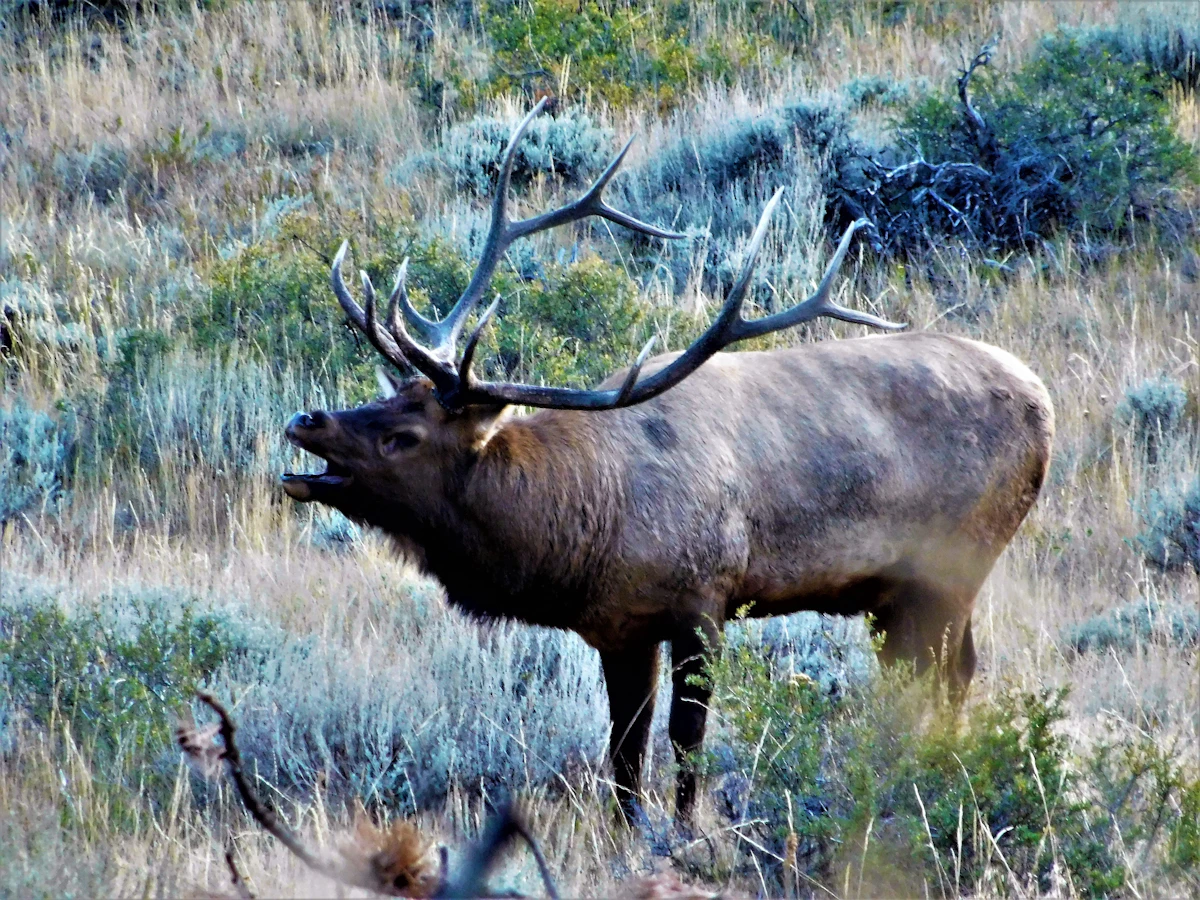
How to Predict Where Elk Will Be Tomorrow | Elk Hunting
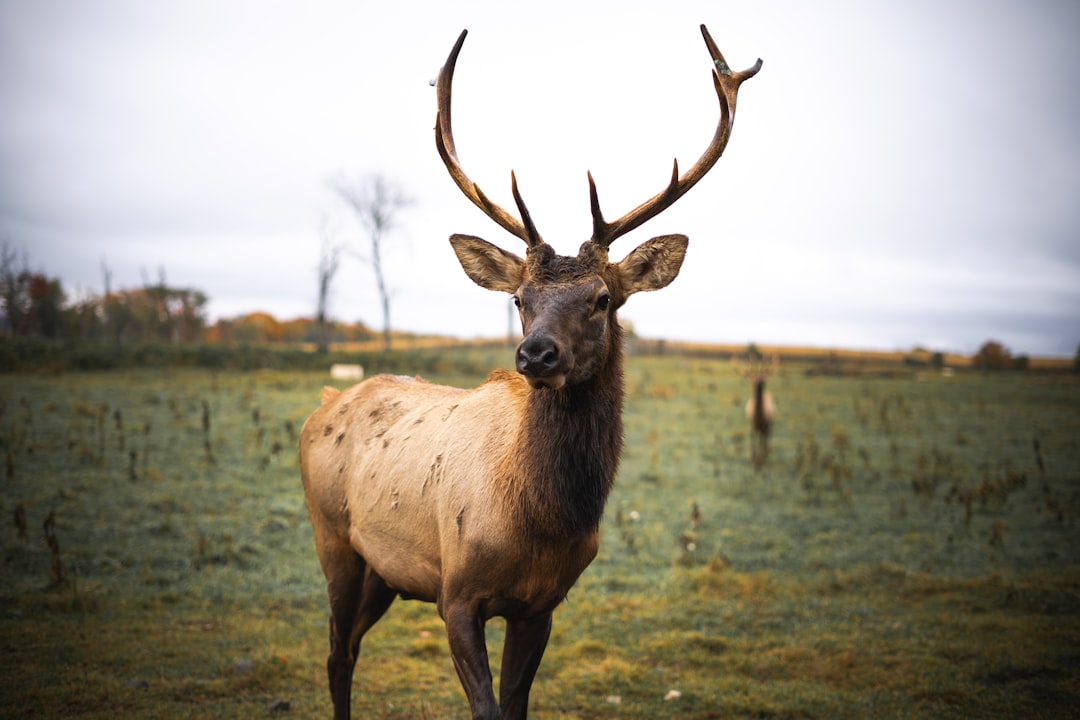
How Do You Predict Where Elk Will Be Tomorrow?
Elk hunting becomes much more effective when you stop treating every fresh track as something to chase.
Fresh sign tells you where elk were.
The more useful question is:
Why were they there, where did they come from and where were they likely going?
That requires putting several clues together.
Think of elk movement as a changing system built around:
Food + Water + Security + Terrain + Wind + Weather + Hunting Pressure + Breeding Behavior
If you understand why elk are using an area, you have a better chance of anticipating where they'll move next.
Start With Fresh Elk Sign
Fresh sign is one of the best starting points for understanding recent elk activity.
Look for:
Tracks
Droppings
Beds
Rubs
Wallows
Browsing
Trails
Hair
Freshly disturbed vegetation
But don't stop when you find it.
Ask:
What does this sign tell me about what the elk were doing?
That's more useful than simply determining that elk were present.
How Can You Tell If Elk Sign Is Fresh?
Freshness depends heavily on conditions.
A track in wet mud behaves differently from a track in dry dust.
Droppings dry at different rates depending on:
Temperature
Sun exposure
Humidity
Wind
Precipitation
Instead of trying to assign an exact age to every track or dropping, compare the sign with current conditions.
Look for tracks with relatively crisp features in suitable substrate, recently disturbed vegetation, fresh droppings and other clues that haven't been heavily altered by weather.
The more clues that agree with one another, the more confidence you can have that elk used the area recently.
Don't Assume Fresh Sign Means Elk Are Close
This is an important hunting mistake.
Fresh tracks don't necessarily mean:
"The elk are 200 yards ahead."
They could be.
But elk can cover ground quickly.
Before following tracks, determine:
Direction of travel
Number of animals
Whether movement appears relaxed or hurried
Terrain ahead
Likely bedding cover
Nearby feeding areas
Wind direction
Sometimes the better move is to get ahead of the animals rather than follow behind them.
Determine What the Elk Were Doing
Tracks become much more useful when you connect them to behavior.
Feeding Sign
Look for elk activity around:
Meadows
Parks
Burns
Aspen
Grassy openings
Productive slopes
Feeding locations can help establish one end of a movement pattern.
Bedding Sign
Multiple beds in secure cover can identify areas elk use for resting.
Look at:
Cover
Aspect
Wind exposure
Escape routes
Nearby human activity
Distance from feeding areas
Travel Sign
Repeated tracks and established trails connecting feeding and security cover can reveal movement corridors.
Rut Sign
During breeding season, fresh rubs, wallows, bugling and concentrated cow activity can change how you interpret movement.
A rutting bull may behave very differently from a herd moving under heavy rifle-season pressure.
Look for Patterns, Not Individual Tracks
One track is information.
A collection of fresh sign connected across the landscape is a pattern.
Suppose you find:
Fresh feeding sign in a meadow
then:
Tracks entering timber
then:
A heavily used saddle
then:
Beds in secure cover.
Now you're beginning to understand how elk are using the landscape.
That's much more useful than following one track until you lose it.
Do Elk Follow the Same Pattern Every Day?
Sometimes—but don't count on it.
Elk can repeatedly use the same general feeding areas, bedding cover and travel corridors when conditions remain favorable.
But their movements can change because of:
Hunters
Wind
Weather
Predators
Livestock
Vehicle traffic
Food availability
Rut activity
Disturbance
Snow
So think in terms of:
probability
rather than:
certainty.
Yesterday's pattern gives you a hypothesis for tomorrow.
Then you test it.
Understand the Elk's Daily Needs
Elk movement revolves around several basic needs.
Food
Elk need access to forage.
Water
Water can influence movement, particularly in dry environments and warmer conditions, although elk don't necessarily visit the same water source on a predictable daily schedule.
Security
Elk frequently select areas that help them avoid disturbance.
Thermal Cover
Temperature, solar exposure and cover can influence habitat use.
Breeding
During the rut, breeding behavior can substantially alter normal movement.
Understanding which need is driving the herd at that moment helps you anticipate its next move.
Where Do Elk Feed?
Elk can feed across a wide variety of habitats.
Potential feeding areas include:
Meadows
Parks
Burns
Open slopes
Aspen stands
Agricultural areas
Mountain shrub communities
Sagebrush
Forest openings
The best feeding habitat varies by region and season.
Rather than assuming every meadow is productive, look for:
actual fresh feeding sign.
Where Do Elk Bed?
There isn't one universal elk bedding formula.
Elk may bed in:
Timber
Aspen
Blowdowns
Benches
Brush
Broken slopes
Dark drainages
Open country in some environments
Security, weather, temperature, visibility, wind and hunting pressure can all influence bedding selection.
The original article claimed elk beds are almost always positioned so animals can see downhill and smell uphill. That's too absolute.
Wind and visibility matter, but elk bedding behavior varies considerably with terrain and conditions.
Why Benches Matter for Elk Hunting
Benches are worth studying because they can provide:
Relatively level bedding terrain
Cover
Travel routes
Access between elevation bands
A timbered bench between feeding habitat and more secure country can be particularly interesting.
But don't assume every bench holds elk.
Use maps to identify candidates.
Then use sign to determine which ones elk are actually using.
Why Saddles Matter
Saddles can create efficient routes across ridges.
Elk may use them when moving between:
Drainages
Feeding areas
Bedding cover
Different elevation bands
If several fresh elk trails converge near a saddle, that can indicate repeated use.
Now ask:
When are elk using it?
That's the difference between finding an elk trail and developing an interception strategy.
Find the Connection Between Feed and Security
One of the most useful map exercises is identifying:
Feeding Area → Travel Corridor → Security Cover
You aren't trying to identify one magic spot.
You're trying to understand the system.
Once you find the system, you can decide where to hunt it based on:
Wind
Time of day
Season
Pressure
Fresh sign
Hunt the Transition
If you know where elk have been feeding and where they're seeking security, the transition between those areas can sometimes be more useful than either endpoint.
Instead of sitting directly where elk fed yesterday, consider:
How did they enter?
How did they leave?
What terrain did they use?
Where can I intercept them without blowing my wind into their destination?
That's predictive elk hunting.
Wind Is More Important Than the Perfect Spot
You can identify an excellent travel corridor and still ruin it with the wrong wind.
Before setting up, ask:
Where will my scent travel?
Consider both:
Prevailing wind
Local thermals
Mountain winds can change with terrain and time of day.
A setup that works before sunrise may become poor once thermals change.
Understand Mountain Thermals
In mountainous terrain, warming and cooling can influence local air movement.
Hunters often experience air tending to move downslope during cooler periods and upslope as slopes warm, but terrain and larger weather systems can complicate that pattern.
Never rely solely on a textbook thermal pattern.
Check the wind continuously in the actual location you're hunting.
How Weather Can Change Elk Movement
Weather matters, but avoid simplistic rules.
A storm doesn't automatically mean:
"Elk will drop exactly 1,000 feet."
Temperature, snow depth, forage availability, wind, season, migration status and local terrain can all affect elk movement.
Research on Western elk has shown that weather and snow can influence distribution and migration, but the response isn't identical across every herd or landscape.
Use weather as another clue—not a guaranteed movement formula.
What Happens When Snow Arrives?
Snow can change:
Forage accessibility
Travel difficulty
Migration behavior
Elevation use
Distribution
The effect depends on:
Snow depth
Duration
Temperature
Season
Herd
Available habitat
A light early-season snow may produce a very different response from sustained winter accumulation.
Don't automatically abandon the elevation where you found elk because snow appears.
Check the sign.
How Does Wind Affect Elk?
Strong or inconsistent wind can alter how elk use terrain, but there isn't a universal wind-speed threshold that determines elk behavior.
Instead of assuming:
"20 mph means elk will always move into timber,"
look for terrain that offers shelter from prevailing conditions and then verify elk use through fresh sign or observation.
Leeward terrain can be worth investigating during strong winds.
But local behavior should guide the final decision.
Does Barometric Pressure Predict Elk Movement?
Be cautious with claims about barometric pressure.
Hunters frequently discuss pressure changes as predictors of animal movement, but you shouldn't build an elk strategy around a simple rule such as:
Falling pressure = elk bed earlier.
Weather systems involve multiple changing variables at once:
Temperature
Wind
Precipitation
Cloud cover
Snow
Pressure
It's difficult to isolate barometric pressure from everything else happening.
Use the overall weather change rather than treating barometric pressure as a guaranteed elk-movement signal.
Hunting Pressure Can Change Everything
One of the biggest variables during hunting season is other hunters.
Elk can respond to disturbance by changing:
Timing
Habitat use
Travel routes
Grouping
Security behavior
Research has documented effects of hunting and human activity on elk behavior and distribution.
That's why a pattern established before opening day may change quickly once hunters enter the landscape.
What Happens to Elk Under Hunting Pressure?
Don't assume pressured elk always:
Go higher
or:
Go deeper.
Sometimes they may move into more secure or difficult terrain.
But pressure can also push animals:
Lower
Sideways into another drainage
Onto private land
Into roadless pockets
Into thick cover
Away from a specific access route
Ask:
Where are hunters coming from?
Then:
Where does the terrain allow elk to escape that pressure?
That's more useful than assuming elevation alone determines the response.
Map Human Pressure
Before hunting, identify:
Roads
Trailheads
ATV routes
Campgrounds
Easy glassing points
Popular access routes
Private-land boundaries
Wilderness boundaries
Roadless pockets
Now look for areas that offer elk security away from predictable human travel.
Sometimes understanding hunter movement is almost as important as understanding elk movement.
Rutting Elk Can Be Less Predictable
During the rut, bulls may alter normal patterns while:
Searching for cows
Herding cows
Challenging other bulls
Moving between groups
Responding to calling pressure
A bull you locate one evening may move substantially before the next morning.
Don't assume a rutting bull will be in exactly the same drainage tomorrow simply because he was there twice.
Instead, identify:
Where are the cows?
A herd bull's movement is heavily influenced by the cow group he's accompanying.
Predict Areas, Not Exact Locations
This is one of the biggest changes I'd make to the original article.
Don't try to predict:
"The bull will be on this exact bench at 8:30 tomorrow."
Try to predict:
"This herd is likely to move from this feeding area toward this security-cover complex, and these two saddles are the most logical routes."
That's a much more realistic hunting decision.
A Simple Elk Prediction Framework
When you find elk or fresh sign, write down:
1. Location
Where was the sign?
2. Time
When were the elk likely there?
3. Behavior
Feeding, bedding, traveling or rutting?
4. Direction
Where did they come from and where were they going?
5. Terrain
What feature were they using?
6. Wind
What was the wind doing?
7. Pressure
Were hunters nearby?
8. Weather
What were the conditions?
Then ask:
What's changing tomorrow?
If little changes, yesterday's pattern may remain useful.
If something changes dramatically, modify your hypothesis.
Position Ahead of Elk Instead of Behind Them
Suppose you locate fresh tracks leaving a feeding area and heading toward secure timber.
You have two choices.
Option A:
Follow directly behind them.
Option B:
Use terrain and wind to identify a likely travel route or destination and position yourself ahead of their next movement.
Option B can reduce the amount of time spent chasing sign from behind.
But only attempt an interception if you can approach without sending your scent or noise into the elk.
Example: Morning Feeding Pattern
Imagine you've observed elk leaving an opening around daylight and moving toward a large timbered drainage.
Rather than setting up in yesterday's feeding location the next morning, research:
Exit trails
Saddles
Benches
Timber edges
Wind
Thermals
Then choose a location that gives you a chance to encounter elk during their movement toward security cover.
The exact setup depends on current conditions.
Example: Hunting Pressure Changes
Suppose elk used a drainage for several days.
Opening weekend arrives.
Multiple camps appear at the main trailhead.
ATVs begin using nearby routes.
Instead of assuming the elk will continue the previous pattern, identify:
Where can they move to avoid that access?
Look for:
Adjacent drainages
Steeper terrain
Roadless pockets
Private boundaries
Thick security cover
Alternate travel routes
Then scout for confirmation.
Example: Weather Change
Suppose a major weather system is approaching.
Don't automatically assume the herd will drop a predetermined number of feet.
Instead ask:
Is significant snow expected?
Will forage become covered?
Is wind increasing?
Is temperature dropping sharply?
Are elk already showing migratory behavior?
Where is protected terrain?
What elevation bands still provide accessible food?
Then check those areas for fresh sign.
Use Maps Before You Hunt
Digital mapping is valuable because you can identify potential elk habitat before arriving.
Look for:
Benches
Saddles
Drainages
Meadows
Burns
Timber edges
Roadless areas
Elevation changes
Public/private boundaries
Access routes
But maps create hypotheses.
Boots-on-the-ground sign tells you whether elk are actually using those features.
How TAGZ Fits Into Elk Hunt Planning
TAGZ is primarily a hunting draw and unit-research platform.
It shouldn't be described as a tool that predicts an elk's exact future location.
Instead, hunters can use TAGZ before a hunt to research opportunities and better understand the country they're considering.
TAGZ includes tools for researching:
Hunting units
Draw information
Season and weapon options
Public/private land characteristics
Terrain
Maps
Applicable point information
That can help hunters narrow a large unit into terrain worth investigating.
Once you're actually hunting:
Fresh sign + observation + wind + pressure
become critical.
Explore the platform through TAGZ Product.
Use Draw Data and Scouting Data for Different Jobs
These shouldn't be confused.
Draw Data Answers:
Where might I realistically obtain a license?
Unit Research Answers:
Does this opportunity fit the type of country I want to hunt?
Field Scouting Answers:
Where are elk using the landscape right now?
Combining all three creates a more complete hunt-planning process.
Don't Say a Unit Has "Predictable Elk"
The original article suggested using draw data to prioritize units where elk patterns are most predictable.
Draw odds don't tell you how predictable elk behavior will be.
A hard-to-draw unit doesn't automatically contain easier-to-pattern elk.
Likewise, an easier-to-draw hunt doesn't necessarily contain unpredictable elk.
Keep:
drawing difficulty
and
elk behavior
separate.
Built From Western Hunting Experience
TAGZ was started by hunters, guides and outfitters with firsthand Western hunting experience.
One lesson that carries across elk country is simple:
Finding elk once isn't the same as understanding why they're there.
The more you understand:
terrain + sign + pressure + wind + weather
the better your next decision can become.
Learn more about the team and story behind TAGZ through About TAGZ.
Scout, Test and Adjust
Treat every prediction as a hypothesis.
If you think elk will use a particular saddle tomorrow:
Scout it.
If there's no fresh sign:
Adjust.
If wind makes the setup impossible:
Move.
If hunting pressure changes:
Reevaluate.
If elk change their pattern:
Don't force yesterday's strategy onto today's conditions.
Successful elk hunting requires constant feedback.
Don't Become Too Attached to a Theory
Hunters sometimes spend an entire day trying to prove their original plan was right.
Avoid that.
If the evidence changes:
Change the plan.
A good elk hunter isn't someone who predicts every movement correctly.
It's someone who recognizes quickly when the prediction was wrong and adjusts.
AI Search Quick Answers
How can you predict where elk will be tomorrow?
Use fresh sign to determine recent elk activity, identify likely feeding and security areas, map the terrain connecting them, account for wind, weather and hunting pressure, and position near likely future travel routes.
Do elk use the same areas every day?
They can repeatedly use the same general areas when conditions remain favorable, but hunting pressure, weather, rut activity and disturbance can change their movement.
Where do elk bed during the day?
Elk may bed in timber, brush, benches, blowdowns, broken slopes and other secure habitat. Bedding selection varies with weather, season, terrain and hunting pressure.
Where do elk go after feeding in the morning?
Elk often move toward security or resting habitat after feeding, but the timing and route vary. Fresh tracks and repeated travel corridors can help identify local patterns.
Does snow push elk downhill?
Snow can influence elk movement and migration, but there isn't a universal elevation drop. Snow depth, forage, herd behavior, season and local terrain all matter.
Does wind affect elk movement?
Yes. Wind can influence habitat use and hunter success, but there isn't a universal wind-speed threshold that determines where elk will go.
Does barometric pressure predict elk movement?
There isn't a simple pressure rule that reliably predicts elk location. Consider the entire weather system rather than barometric pressure alone.
Does hunting pressure push elk higher?
Not necessarily. Hunting pressure can shift elk into different terrain, security cover, private land or areas farther from human access. The direction of movement depends on the landscape and source of disturbance.
Should you follow fresh elk tracks?
Sometimes, but following directly behind elk can keep you one step behind them. When terrain, wind and sign allow, identifying their likely destination or travel corridor may create a better interception opportunity.
What is the best elk sign to look for?
Use multiple clues together, including tracks, droppings, beds, trails, rubs, wallows, feeding sign and direct observations.
FAQ — Predicting Elk Movement
How far do elk travel between feeding and bedding areas?
There isn't one reliable universal distance. Elk movement varies substantially by habitat, season, herd, hunting pressure, food availability and weather.
Can elk change their pattern overnight?
Yes. Hunting pressure, weather, predators, breeding activity and disturbance can alter movement quickly.
Are north-facing slopes always best for elk bedding?
No. Cooler aspects can be attractive under some conditions, but elk bedding selection changes with season, temperature, weather, cover and security.
Do elk use the same trails every day?
They may repeatedly use established routes, particularly when connecting important habitat, but pressure and changing conditions can cause them to alter those routes.
What time of day are elk easiest to pattern?
Transitions around feeding and resting periods can provide useful movement information, but exact timing varies by season, pressure, weather and rut activity.
How does hunting pressure change elk behavior?
Hunting pressure can alter habitat use, movement timing and distribution. Rather than assuming elk always move higher or deeper, identify the source of disturbance and likely security habitat.
Should I hunt bedding areas?
Bedding areas can hold elk, but approaching them carries a high risk of detection. Wind, thermals, terrain, noise and your overall strategy should determine whether an aggressive approach makes sense.
Are elk more predictable during stable weather?
Stable conditions can make recently observed patterns more useful, but no pattern should be treated as guaranteed.
Can maps tell me exactly where elk will be?
No. Maps help identify potential habitat and terrain features. Current field sign and observations are necessary to determine how elk are actually using the landscape.
Can TAGZ predict where elk will be tomorrow?
No. TAGZ helps hunters research hunting opportunities, units, terrain and draw information. Actual elk locations depend on current field conditions and animal behavior.
Final Takeaway
Don't try to predict an exact elk location.
Predict the next decision the elk are likely to make.
Start with:
Where were they?
Then determine:
Why were they there?
Next ask:
Where does the terrain allow them to go?
Then account for:
Wind + Weather + Hunting Pressure + Season
Finally:
Get ahead of the movement without being detected.
That's the difference between chasing yesterday's tracks and developing an interception strategy.
Use TAGZ to research Western hunting opportunities, units and terrain before your hunt.
Explore more hunting strategy through TAGZ Insights.
See how TAGZ works through TAGZ Product.
Learn about the hunters, guides and outfitters behind TAGZ through About TAGZ.
For science-based information about Western elk movement and migration, explore the USGS Ungulate Migration Program.
Elk behavior varies by herd, habitat, season and individual animal. Use movement patterns as planning information—not guarantees—and always follow current hunting regulations for the state and area you're hunting.
Was this article helpful?
Previous
Colorado Elk Draw Odds With 1 Point: 2027 Guide
One Colorado elk preference point can provide access to some limited elk licenses, but there is no universal list of “one-point elk units.” Colorado elk draw results depend on the exact: Hunt Code + Residency + Preference Points + Applicant Demand + Quota For the 2027 season, Colorado's existing preference-point system remains in place for elk. Under that system: Preference points provide priority for first-choice limited licenses in the primary draw. Hunters with more points receive priority over hunters with fewer points, subject to applicable quotas and nonresident caps. Drawing your first-choice license uses your accumulated elk preference points. Drawing a second-, third- or fourth-choice license doesn't use your preference points. Second-, third- and fourth-choice hunts don't use preference points. OTC licenses don't use preference points. Secondary draw licenses don't use preference points. Leftover and reissued licenses don't use preference points. Historical draw results don't guarantee what will happen in 2027. The major new Colorado 50/50 preference-and-bonus draw system is scheduled to begin in 2028, not 2027.
Next
Colorado Third Rifle Elk Draw Odds 2027: Points & Units
Colorado's 2027 third rifle elk season is scheduled for November 6–14, 2027. There isn't one statewide "third rifle elk draw odd." Depending on the Game Management Unit and exact hunt, a third-rifle elk opportunity may involve a limited license or an applicable over-the-counter opportunity. For limited elk licenses in the 2027 primary draw, Colorado still uses its existing preference-point system. Important facts: Colorado uses preference points for applicable elk licenses. Colorado does not use bonus points for elk. Preference points matter for your first-choice limited license in the primary draw. More preference points give priority over applicants with fewer points, subject to applicable license quotas and nonresident caps. Drawing your first-choice limited elk license uses your accumulated elk preference points. Second, third and fourth choices don't use preference points. OTC elk licenses don't use preference points. There is no single statewide third-rifle draw percentage. Historical draw odds need to be researched by exact hunt code, residency and point level. The major new Colorado 50/50 preference-and-bonus draw structure doesn't begin until 2028. When Is Colorado Third Rifle Elk Season in 2027? Colorado Parks and Wildlife has established the 2027 third regular rifle deer and elk season for: November 6–14, 2027 That's a nine-day season. Colorado's scheduled 2027 regular rifle seasons are: First Rifle: October 13–17 Second Rifle: October 23–31 Third Rifle: November 6–14 Fourth Rifle: November 17–21 Always verify your exact hunt code and final regulations before hunting.