Camp Setup for DIY Elk Hunts — Base Camp & Spike Camp Guide
Every successful elk hunt starts with a good camp. It doesn't matter whether you're hunting Colorado, Idaho, Montana, Wyoming, New Mexico, or Utah, your camp setup can make or break the experience. A poorly planned camp costs you sleep, time, and good hunting decisions, while a well-designed one lets you recover faster, stay organized, hunt longer, and adapt to changing conditions. The best hunters understand that camp isn't just a place to sleep, it's your headquarters, and the best camp is simply the one that keeps you comfortable, organized, and hunting efficiently instead of constantly managing problems.
Three kinds of elk camp
Most elk hunters fall into one of three categories. A truck camp is road-accessible and remains one of the most effective ways to hunt elk, offering comfortable sleeping, more food, more gear, and easy mobility so you can cover large areas and relocate quickly. Many successful truck camps are built around a pickup with a camper shell, a ground tent, a small trailer, or a rooftop tent, and hunters routinely underestimate how valuable hot meals and real recovery become over a week-long hunt. A base camp sits between truck and spike camps, usually several miles from roads, near hunting areas, and central enough that you can return daily, which lets you access remote terrain and avoid daily travel while keeping some comfort. When choosing a base camp location, look for nearby water, flat ground, and wind protection with central access to your hunting areas, and avoid camping directly where you expect elk so you keep pressure away from camp. A spike camp is the ultimate backcountry setup, with everything carried into the mountains for less travel, more hunting time, and access to remote country at the cost of comfort and added physical demand, which is why spike camps shine during archery season. Many hunters hike too far or not far enough; generally two to five miles from roads eliminates significant pressure, though finding overlooked terrain matters more than raw distance.
Shelter, heat, and sleep
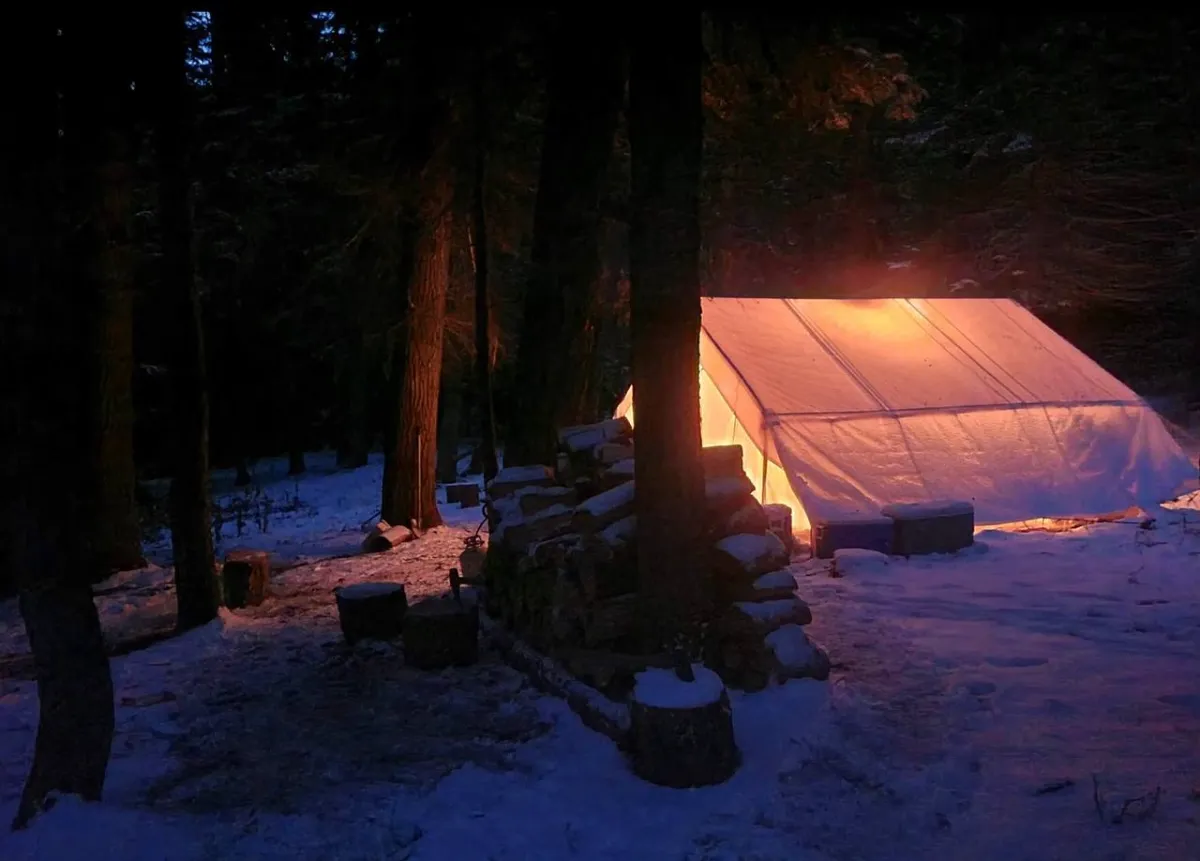
Your shelter should match your hunting style. Backpack tents are lightweight, fast to set up, and weather resistant, popular with solo and mobile hunters, while floorless shelters are lightweight, spacious, and stove compatible, a favorite among experienced western hunters that really shines late season. Wall tents remain the king of elk-camp comfort, spacious, warm, and social, perfect for group hunts, long stays, and base camps, and many legendary elk camps revolve around one. Cold camps wear hunters down, so a wood stove suits wall tents and floorless shelters while a propane heater works for truck camps and enclosed shelters, always following safety recommendations. Good sleep equals better hunting, so focus on a quality bag, a comfortable pad, and an appropriate temperature rating, and plan for sleeping colder than expected at elevation.
Food, water, and organization
Food fuels the hunt, and hot meals improve morale dramatically, whether you run a lightweight Jetboil, a camp stove for the truck, or a propane griddle at base camp. Many hunters underpack food, so focus on calories, simplicity, and protein with freeze-dried meals, breakfast burritos, trail mix, jerky, and protein bars, because mountain hunting burns serious calories. Always have a water plan using jugs, gravity filters, or portable filters, and never assume water availability, especially during drought years. The best camps are organized: separate your food, clothing, hunting gear, kill kits, and emergency equipment, and stage tomorrow's gear the night before by laying out clothing, optics, weapon, food, and water, since morning efficiency often determines how early you're glassing. Modern hunters also rely on phones, GPS units, headlamps, and battery packs, so bring power banks, solar chargers, or vehicle charging because dead batteries create problems.
Meat care, hygiene, and balance
The hunt isn't over after the shot, so plan for game bags, coolers, ice, and meat transport, remembering a mature bull can produce hundreds of pounds of meat. Simple hygiene improves morale too, so carry baby wipes, a camp towel, a toothbrush, and basic toiletries, and in bear country store food properly, keep a clean camp, and separate sleeping and cooking areas. The most common camp mistakes are overpacking gear, underpacking food, camping too close to elk, ignoring weather forecasts, and skipping organization, because the best camps are efficient, not excessive. Comfort and mobility are a constant balancing act, since more comfort means more gear and weight while more mobility means less comfort and greater flexibility, and every hunter has to find their own line. In the end your camp should support the hunt, not become the hunt. Choosing where to camp is often as important as choosing where to hunt, which is exactly where TAGZ helps, with unit research, terrain analysis, access scouting, and hunt planning before you ever leave home.
Was this article helpful?
Previous
How Utah Bonus Points Work — Complete Draw Guide
Utah's bonus point system rewards long-term applicants while maintaining opportunity for everyone. By understanding the maximum point draw, random draw, and point-squaring system, hunters can build smarter strategies and maximize their chances of eventually drawing one of Utah's coveted hunting permits.
Next
Best Public Access Units
Best Public Access Units breaks down realistic big game planning around terrain, access, pressure, scouting, and hunter behavior so TAGZ readers can build a practical western hunt plan instead of chasing hype.