California Elk Draw Odds 2027: Points, Tags & Strategy
How Does California's Elk Draw Work?
California elk tags are limited.
Hunters apply through the:
CDFW Big Game Drawing
for available elk hunts.
Applicants need:
A valid annual California hunting license
An Elk Tag Drawing Application
The correct hunt choices or preference-point code
A completed application before the deadline
CDFW then allocates available tags according to California's modified preference-point system.
Does California Have OTC Elk Tags?
Not as a broad general elk-hunting opportunity.
The original article's claim that some California elk tags are generally available over the counter is misleading.
California's standard elk hunting opportunities are tightly controlled.
Hunters should primarily research:
Big Game Drawing Elk Tags
and separate opportunities such as:
SHARE Elk Hunts.
Don't build a California elk plan around buying a general OTC bull elk tag after the draw.
Does California Use Preference Points for Elk?
Yes.
California uses preference points for elk in its Big Game Drawing.
But California isn't a simple pure-preference system where every available elk tag automatically goes to the applicants with the most points.
It uses a:
Modified Preference-Point System.
That distinction is important.
How Does California's Modified Preference-Point System Work?
For applicable elk hunts, California divides available tags between:
Preference-Point Tags
and:
Random Tags.
The exact allocation depends on the number of tags available for that hunt.
Under the current system, hunts with very small quotas can operate differently from hunts with larger quotas.
That's why hunters should research the:
Exact Hunt Code + Tag Quota + Preference-Point Level + Historical Applicant Pool
rather than assuming every California elk hunt follows an identical percentage split.
Can You Draw California Elk Without Maximum Points?
Yes.
Because California allocates applicable elk tags through both preference and random portions, hunters below maximum points can potentially draw through the random portion.
That includes first-time applicants for eligible hunts.
However:
Possible doesn't mean likely.
California elk tags can be extremely competitive.
Do More Preference Points Improve Your Chances?
Yes, particularly for the preference portion of the drawing.
Hunters with more points can have priority for applicable preference-point tags.
But having fewer points doesn't necessarily reduce your chance to zero because random tags can provide another pathway.
This means California elk strategy isn't simply:
"Wait until I have enough points."
You also need to understand the random component.
Is California a Bonus-Point State for Elk?
No.
California uses:
Preference points
not:
Bonus points
for the standard elk drawing.
Don't use those terms interchangeably.
How Do You Earn a California Elk Preference Point?
An eligible applicant can earn an elk preference point by:
- Applying unsuccessfully for an elk tag under applicable rules
or:
- Using California's elk preference-point-only application code
A hunter can generally earn:
One elk preference point per license year.
Can You Apply for a Point Without Trying to Draw Elk?
Yes.
California provides a:
Preference Point Only
code for elk.
This allows a hunter to build an elk preference point without trying to draw an actual elk hunt that year.
That can make sense when:
You can't hunt that season
Your schedule is uncertain
You want to build points
You're saving toward another opportunity
You don't want to risk drawing that year
What Happens to Your Points When You Draw?
When you successfully receive an applicable elk tag through the Big Game Drawing, your accumulated elk preference points are generally:
Reset to zero.
That's why you shouldn't apply for an elk hunt you don't actually want simply because you think it might be easier to draw.
Can You Return a California Elk Tag and Restore Points?
California currently allows eligible elk tags to be returned before the season begins under specific conditions.
If CDFW approves the return, preference points can be reinstated and the applicable year's preference point awarded.
Processing requirements and fees apply.
Always verify the current tag-return rules before relying on this option.
How Many California Elk Applications Can You Submit?
One.
Each hunter may submit only:
One Elk Tag Drawing Application per license year.
This is an important correction to the original article.
You can't submit separate standard elk applications for five different units as independent chances.
Can You List Multiple Elk Hunt Choices?
California's application allows hunters to rank hunt choices according to the current drawing rules.
But don't describe those choices as:
Multiple independent applications.
They're choices within your single elk application.
The drawing mechanics and preference-point treatment of those choices matter.
First Choice Is Critical
Your first choice plays a major role in California's preference-point system.
If you're building a serious California elk strategy, don't simply fill your choices with random units.
Research how:
First Choice + Preference Points + Random Allocation + Quota
interact for the exact hunt you're considering.
Actual 2027 California Elk Odds Don't Exist Yet
Before the 2027 drawing occurs, there are no actual:
2027 draw results.
What hunters can research are:
Historical California elk drawing statistics.
Those statistics are valuable.
But they're historical.
Applicant demand and tag quotas can change.
How to Research California Elk Draw Odds
CDFW publishes detailed:
Big Game Drawing Statistics.
For elk, those statistics are separated into categories such as:
Bull and spike bull hunts
Antlerless and either-sex hunts
Apprentice hunts
Preference-point levels
That's much better than relying on a generic website claiming:
"This unit has 5% odds."
Research Hunt Codes, Not Just Units
California elk opportunities should be researched using the exact:
Hunt Code
rather than only a geographic unit or zone.
Two hunts in the same general area can have different:
Legal animals
Seasons
Quotas
Applicant demand
Preference-point results
Weapon requirements
The hunt code identifies the actual opportunity you're applying for.
California Bull Elk Draw Odds
Bull elk hunts can receive substantial demand.
When evaluating one, research:
Hunt Code + Applicants + Quota + Preference Points + Random Tags + Residency
Don't assume that a hunt historically drawing at a certain point level will require exactly the same number of points next year.
California Either-Sex and Antlerless Elk Draw Odds
California also offers applicable:
Either-sex
and:
Antlerless
elk hunts.
These should be researched independently from bull hunts.
Applicant demand, quota and historical point distributions can be completely different.
California Has Three Elk Types
California provides hunting opportunities involving three types of elk:
Tule Elk
Roosevelt Elk
and:
Rocky Mountain Elk.
Where and how you hunt them varies considerably.
That makes California unusual among Western elk states.
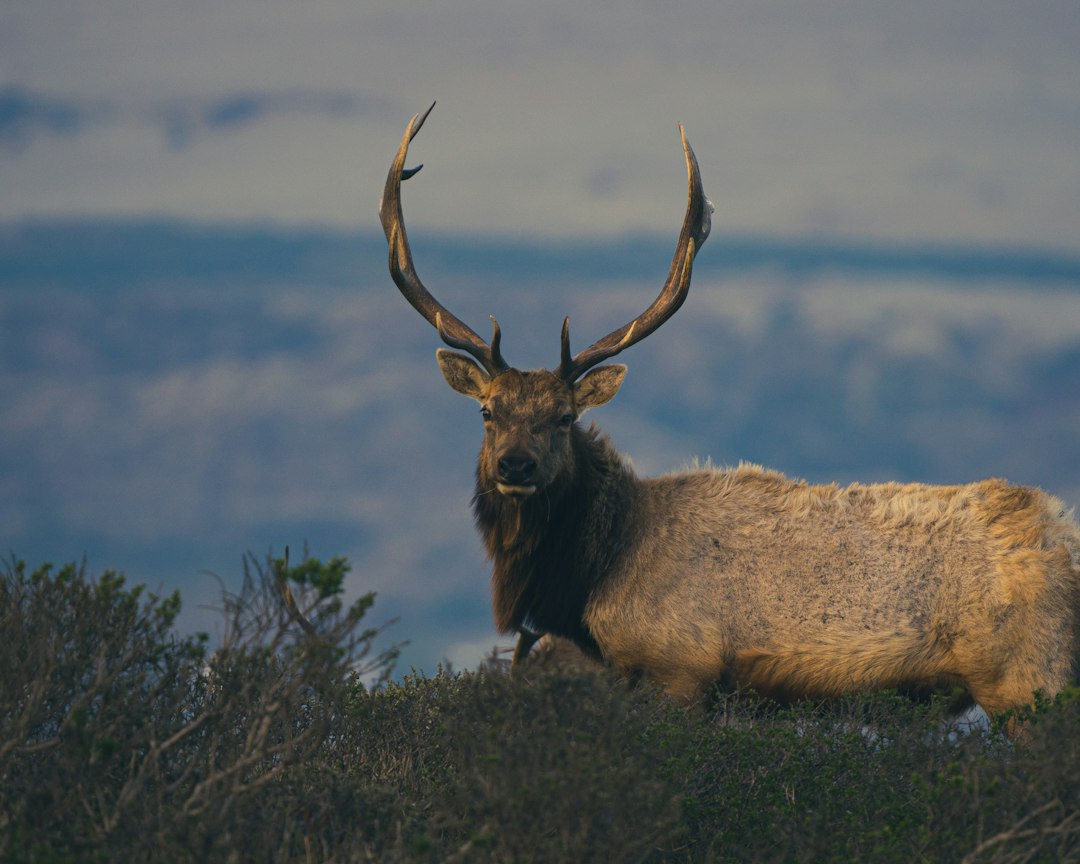
California Tule Elk
Tule elk are native to California and are one of the state's signature big-game species.
Tule elk tags are highly limited.
Hunters interested in Tule elk should research the exact hunt rather than assuming all Tule elk opportunities have the same drawing difficulty.
Evaluate:
Hunt code
Quota
Preference-point distribution
Random allocation
Access
Season
Legal animal
California Roosevelt Elk
Roosevelt elk occur primarily in northwestern California.
California offers applicable Roosevelt elk opportunities through its controlled elk systems.
Again, research the exact hunt.
Don't combine Roosevelt elk statistics with Tule elk or Rocky Mountain elk data.
California Rocky Mountain Elk
California also supports Rocky Mountain elk populations and associated hunting opportunities.
These hunts have their own:
Locations
Quotas
Seasons
Applicant demand
Treat each hunt as its own drawing opportunity.
California Nonresident Elk Draw
Nonresidents can apply for California elk.
But California has an extremely important nonresident restriction.
Under current rules:
Only one nonresident per license year may be drawn for an elk tag through the Big Game Drawing.
That's statewide.
Not one per unit.
Not one per elk subspecies.
Not one per hunt code.
One nonresident elk tag through the Big Game Drawing per license year.
This dramatically changes how a nonresident should interpret California elk draw odds.
Nonresidents Don't Simply "Need More Points"
The original article suggested that nonresidents generally need to accumulate more points than residents.
That's an oversimplification.
The bigger issue is California's:
One-nonresident-per-species-per-year elk limitation.
A nonresident should evaluate California elk as a uniquely constrained drawing opportunity.
Having many preference points doesn't eliminate that statewide nonresident restriction.
Can Nonresidents Apply as a Party for Elk?
No.
CDFW states that nonresidents can't apply for elk as a party because no more than one nonresident elk tag can be awarded through the Big Game Drawing per license year.
California Elk Application Deadline
Under the current system, California's Big Game Drawing applications are available beginning:
April 15
and the application deadline is:
June 2
For example, California's 2026 deadline was:
June 2, 2026.
Don't automatically hard-code that date as the final 2027 deadline until CDFW publishes the 2027 Big Game Hunting Digest.
Does Applying Early Improve California Elk Odds?
No.
Submitting your application on April 15 doesn't give you better drawing priority than submitting a valid application before the deadline.
Applying early is still useful because it gives you time to:
Check your license
Verify preference points
Review hunt codes
Correct problems
Avoid missing the deadline
But:
Application timing doesn't create additional preference.
Do You Need a California Hunting License to Apply?
Yes.
Hunters need a valid annual California hunting license to enter the elk drawing.
A California:
Two-Day Nonresident Hunting License
isn't valid for applying for or hunting elk.
Nonresidents need the appropriate annual hunting license.
How Much Does California Elk Cost?
Fees change over time.
For context, under California's 2026 fee schedule:
Elk Drawing Application — $8.38
Resident Elk Tag — $610.20
Nonresident Elk Tag — $1,871.80
These are 2026 figures.
Don't present them as guaranteed 2027 prices.
Always verify current fees before applying.
California Elk Draw Odds vs Harvest Success
These statistics answer different questions.
Draw Odds
How difficult was it to receive the tag?
Harvest Success
How frequently did tag holders report harvesting?
A hunt can be:
Extremely difficult to draw
without guaranteeing:
An easy hunt.
Don't use draw difficulty as a substitute for hunt-quality or harvest analysis.
High Point Requirements Don't Guarantee Bigger Bulls
A hunt that historically requires many preference points isn't automatically a better trophy hunt.
High demand can result from:
Extremely low tag quotas
Reputation
Elk subspecies
Season timing
Access
Location
Historical publicity
Point requirements measure:
Demand relative to available preference tags.
They aren't an antler-size score.
Easier Draw Doesn't Automatically Mean Worse Elk Hunting
Likewise, a hunt with less applicant demand isn't automatically inferior.
Lower demand can reflect:
Access
Terrain
Season dates
Weapon restrictions
Travel logistics
Private land
Lower hunter familiarity
Research the hunt itself.
California Elk Harvest Reporting
All California elk tag holders are required to submit harvest reports.
Successful hunters must report according to CDFW requirements.
Unsuccessful tag holders also have reporting requirements after the season.
That reporting contributes to California's elk management information.
California SHARE Elk Hunts
California provides another important elk opportunity through:
SHARE — Shared Habitat Alliance for Recreational Enhancement.
SHARE works with participating landowners to provide public hunting opportunities on private property.
SHARE elk hunts are:
Separate from the standard Big Game Drawing.
Do SHARE Elk Hunts Use Preference Points?
No.
SHARE Access Permits are awarded through:
Random drawings.
Preference points don't give you an advantage in the SHARE drawing.
That means:
A first-time SHARE applicant has the same point-based standing as a longtime applicant.
There is no preference-point advantage.
Why SHARE Matters for Elk Hunters
SHARE can create additional California elk opportunities outside the standard Big Game Drawing.
Current SHARE elk offerings can include hunts involving:
Tule elk
Roosevelt elk
Rocky Mountain elk
depending on participating properties and the year's opportunities.
Because SHARE is a separate random drawing, it deserves its own place in a California elk application strategy.
SHARE Isn't an OTC Elk Tag
Don't confuse SHARE with:
Over-the-counter elk hunting.
SHARE Access Permits are awarded through a separate drawing for participating properties.
You still need to follow the applicable SHARE and hunting requirements.
California Fund-Raising Elk Tag
California also offers a separate:
Fund-Raising Random Drawing Elk Tag
opportunity.
This is separate from the standard preference-point Big Game Drawing.
Hunters researching every possible California elk pathway should distinguish between:
Big Game Drawing
SHARE
and:
Fund-Raising Drawing
opportunities.
Can You Hunt California Elk Without Many Preference Points?
Potentially.
Several pathways don't depend entirely on being at the top of the preference-point pool.
These can include:
Random Tags Within the Big Game Drawing
SHARE Elk Drawings
and:
Applicable Fund-Raising Random Draw Opportunities
That doesn't mean any of these are easy.
California elk opportunities can remain extremely competitive.
But high preference points aren't the only possible pathway.
Should You Apply With Zero Points?
That depends on your goals.
A zero-point applicant may still have a random opportunity through applicable hunts.
If unsuccessful under the applicable rules, the hunter can begin accumulating preference points.
So don't automatically conclude:
"There's no reason to apply until I have 10 points."
Instead, understand:
Preference Opportunity + Random Opportunity + Hunt Quota + Applicant Demand
Should You Chase the "Easiest" California Elk Hunt?
Not automatically.
Suppose one hunt historically shows better drawing probability.
Before applying, investigate:
Legal animal
Elk subspecies
Access
Terrain
Private land
Weapon
Season
Historical harvest
Travel
Hunt logistics
The easiest tag to draw isn't necessarily the hunt that best matches your goals.
Point Creep in California
Preference-point demand can change over time.
A hunt that historically allocated preference tags at one point level may require more in a later year.
That's often described as:
Point Creep.
But don't assume point requirements always increase.
Changes in:
Tag quota
Applicant demand
Hunt regulations
Point distribution
can move historical requirements in either direction.
Historical Point Levels Aren't Guarantees
Suppose a hunt's preference tags were historically awarded at:
15 points.
That doesn't mean:
15 points guarantees the tag next year.
The applicant pool can change.
The quota can change.
And applicants at the same point level can outnumber available preference tags.
Research several years of data whenever possible.
How to Build a California Elk Strategy
Start with your actual goal.
Ask:
Which elk species do I want to hunt?
Then:
Bull, antlerless or either-sex?
Then:
Resident or nonresident?
Then:
How many elk preference points do I have?
Then research:
Hunt Code + Quota + Preference Tags + Random Tags + Applicant Point Distribution + Access + Harvest
That creates a much stronger strategy than simply searching:
"Best California elk unit."
How TAGZ Helps Research California Elk
TAGZ helps hunters organize draw and unit information around the variables that actually matter.
For California elk, that means researching:
Residency
Preference points
Hunt code
Elk subspecies
Legal animal
Historical applications
Tag quota
Historical point distribution
Random opportunity
Season
Access
Terrain
Harvest data where publicly available
Instead of looking for one generic California elk percentage, hunters can compare opportunities that fit their actual application profile.
TAGZ Doesn't Guarantee California Elk Tags
Historical drawing information can help hunters make better decisions.
It can't guarantee:
A draw
A future point requirement
or:
A successful hunt.
California elk quotas and applicant pools can change.
Random portions of the drawing are, by definition, uncertain.
Use historical information as:
A planning tool
not:
A promise.
Built by Hunters, Guides and Outfitters
TAGZ was started by hunters, guides and outfitters with firsthand Western hunting experience.
California is a good example of why hunters need to understand the actual state-specific system.
It's not enough to say:
"California uses preference points."
The important questions are:
How many tags are preference-based?
How many are random?
What hunt code am I applying for?
How many points do I have?
Am I a resident or nonresident?
What other opportunities exist outside the standard draw?
That's where useful application research begins.
Learn more through About TAGZ.
Does California use preference points for elk?
Yes. California uses a modified preference-point system for its standard Big Game Drawing elk tags.
Does California use bonus points for elk?
No. California uses preference points.
Can you draw California elk with zero points?
Yes. Applicable hunts include random tag allocation, meaning applicants below maximum points can potentially draw.
Are California elk tags OTC?
California doesn't have a broad general OTC elk system. Standard elk tags are issued through the Big Game Drawing, with separate opportunities such as SHARE.
How many California elk applications can I submit?
Each hunter may submit only one Elk Tag Drawing Application per license year.
Can nonresidents apply for California elk?
Yes.
How many nonresidents can draw California elk?
Under current rules, only one nonresident per license year may draw an elk tag through California's Big Game Drawing statewide.
Can nonresidents apply as a party for elk?
No.
When is the California elk application deadline?
Under the current system, Big Game Drawing applications are available beginning April 15 and must be completed before midnight on June 2. Verify the official 2027 deadline when CDFW publishes it.
Can I buy an elk preference point without trying to draw?
Yes. California provides an elk preference-point-only application code.
Do California SHARE elk hunts use preference points?
No. SHARE Access Permits are awarded through a separate random drawing.
Does applying early improve California elk odds?
No.
FAQ — California Elk Draw Odds 2027
How are California elk draw odds calculated?
There isn't one statewide percentage. Historical drawing probability depends on the exact hunt, quota, applicant pool, preference-point distribution, random allocation and residency.
What are the actual 2027 California elk draw odds?
Actual 2027 results don't exist until the drawing occurs. Hunters can use previous CDFW drawing statistics to evaluate historical competition.
Do more preference points guarantee a California elk tag?
No. Preference points can provide priority for applicable preference tags, but quotas and applicant distributions still matter.
Can a first-time applicant draw California elk?
Yes, through applicable random portions of the drawing, although some hunts can have extremely low probabilities.
Do nonresidents need more points than residents?
That's not the best way to describe California. The major nonresident constraint is that only one nonresident elk tag can currently be awarded through the Big Game Drawing statewide each license year.
Can I submit multiple elk applications?
No. California allows one Elk Tag Drawing Application per hunter per license year.
Are Tule elk tags difficult to draw?
Many Tule elk opportunities receive substantial demand relative to their limited quotas. Research the exact hunt code and historical CDFW drawing statistics rather than using one statewide percentage.
Does California have Roosevelt elk hunts?
Yes. California offers applicable Roosevelt elk hunting opportunities, particularly in the northwestern portion of the state.
Does California have Rocky Mountain elk hunts?
Yes. California also has Rocky Mountain elk hunting opportunities.
Can I hunt elk through SHARE?
Yes. CDFW's SHARE program provides separate elk hunting opportunities on participating properties through random Access Permit drawings.
Does SHARE use my elk preference points?
No.
Should I apply only for the hunt with the best odds?
Not necessarily. Consider species, legal animal, access, season, terrain and the type of hunt you actually want.
Continue Planning Your California Elk Application
California elk hunting is highly limited, but the draw is more nuanced than simply:
"Build the most points and wait."
The standard system combines:
Preference-Point Tags
with:
Random Tags
depending on hunt quota.
California also offers separate opportunities through programs such as:
SHARE.
For 2027 planning, research:
Residency + Preference Points + Hunt Code + Elk Type + Legal Animal + Quota + Historical Applicants + Preference Allocation + Random Opportunity + Access
Nonresidents should pay particular attention to California's current:
One nonresident elk tag per license year through the Big Game Drawing
restriction.
Use TAGZ to research California elk opportunities and historical draw information.
Explore additional draw and hunting research through TAGZ Insights.
See how TAGZ works through TAGZ Product.
Learn about the hunters, guides and outfitters behind TAGZ through About TAGZ.
For final 2027 hunt codes, quotas, deadlines, fees and regulations, always verify the applicable California Big Game Hunting Digest and CDFW Big Game Hunting information before applying.
Historical draw results and preference-point levels are planning tools—not guarantees of future drawing success.
Was this article helpful?
Previous
Alaska Hunting Draw 2027: Random Odds & Application Guide
Alaska uses a random drawing system for its drawing permit hunts. There are no preference points or bonus points. Previous unsuccessful applications don't give you additional priority in future drawings. But Alaska has an important feature that distinguishes it from many other random draws: Hunters can generally submit up to six applications per species and can apply for the same hunt more than once, subject to hunt-specific restrictions. That means additional valid applications for a species can increase your overall chance of receiving a permit for that species. Important Alaska draw facts: No preference points No bonus points Random drawing Most drawing hunts are available to both residents and nonresidents Up to six applications per species under the general rule You can generally apply for the same hunt more than once Only one drawing permit per species can ultimately be awarded to an applicant Applications are online only Applying earlier doesn't receive better random priority Hunt-specific residency and guide restrictions can apply
Next
Nevada Elk Draw Odds With 0 Points | 2027 Guide
Yes. You can draw a Nevada elk tag with zero bonus points. Nevada doesn't use a traditional preference-point system where applicants with the most points automatically receive tags first. Instead, Nevada uses: Random Draw + Squared Bonus Points Under the current system, the number of random-number entries associated with an application is calculated as: Bonus Points² + 1 That means: 0 points = 1 entry 1 point = 2 entries 2 points = 5 entries 3 points = 10 entries 5 points = 26 entries 10 points = 101 entries More bonus points improve your probability of receiving a favorable draw number. But: Zero-point applicants can still draw. There is no single statewide zero-point Nevada elk draw percentage. Historical results need to be researched by the exact residency, elk category, weapon, unit group, hunt and choice